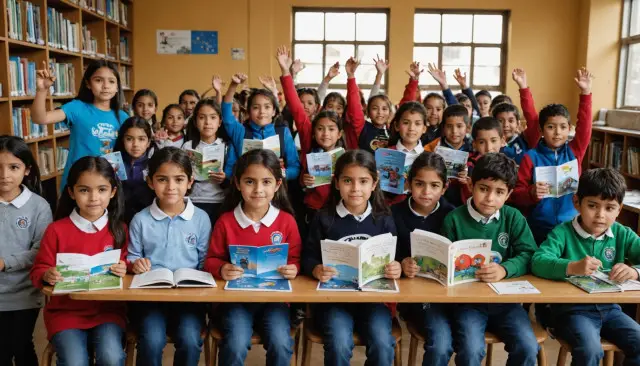
Why is Book Day celebrated on April 23rd in Chile?
April 23rd is a date marked with special significance on our country's cultural calendar. World Book and Copyright Day is an international commemoration that has gained unprecedented momentum in Chile, becoming the central event of Book Month. This date was not chosen at random by UNESCO in 1995; its origin dates back to a fascinating historical coincidence: the death of three great pillars of world literature in 1616: Miguel de Cervantes, William Shakespeare, and Inca Garcilaso de la Vega.
In the Chilean context, this celebration seeks not only to pay tribute to great authors but also to foster a love of reading in a society facing constant challenges in comprehension and access. This day aims to highlight the importance of intellectual property and respect for copyright, fundamental elements for the continued flourishing of the national creative industry. Reading in Chile is seen as a tool for emancipation and personal development, and April 23rd is the perfect moment to remember that a book is, above all, a window to other possible worlds.
The international origin of the anniversary
The original idea for celebrating this day came from Catalonia, Spain, where there is a tradition of giving a rose for every book sold on Saint George's Day (Sant Jordi). Over time, this local custom spread until UNESCO decided to officially recognize it globally. For Chile, adopting this date has meant joining a worldwide network promoting the written word, allowing independent publishers, large bookstores, and public libraries to unite in a single purpose: bringing literature closer to the public.
The importance of reading in Chilean identity
Chile is recognized worldwide as a country of poets. The depth of our literature, which has given the world two Nobel Prizes, is a fundamental pillar of our national identity. Celebrating Book Day in Chile in 2026 means acknowledging that the written word has been the vehicle for recording our history, our sorrows, and our hopes. From colonial chronicles to contemporary narratives, the book has been the medium upon which the collective imagination of what it means to be Chilean has been built.
What activities are taking place for Book Day in Chile 2026?
For 2026, the activities planned across the country are varied and aim to decentralize access to culture. The Ministry of Cultures, Arts, and Heritage, along with several civil organizations, has designed a program that includes everything from street fairs to virtual events. It's common to see the main squares of major cities filled with stands offering everything from literary classics to the latest publications.
One of the most noteworthy initiatives is the release of books in public spaces, where citizens can find copies in parks or subway stations, with the sole condition that they read them and share them again. In addition, many bookstores are offering special discounts throughout the day on April 23rd, encouraging the purchase of Chilean books. If you're looking for something to read, you can check out our list of recommended books for summer in Chile 2026 , which is still available for those who wish to update their personal library.
Events in the Metropolitan Region
In Santiago, the epicenter of the celebrations is usually concentrated in emblematic locations such as the Gabriela Mistral Cultural Center (GAM), the National Library, and Forest Park. For 2026, marathons of public readings are planned, where cultural figures and ordinary citizens read excerpts from essential works. Bookbinding and creative writing workshops are also organized for young people, aiming to empower them not only to be consumers of stories but also creators.
Celebrations in regions and public libraries
Decentralization is key to Chile's Book Day 2026. In Valparaíso, community libraries are organizing poetry tours through the hills, highlighting the legacy of local authors. In the south, cities like Concepción and Valdivia are leveraging their cultural centers to host children's book fairs, recognizing that promoting reading must begin in early childhood. The National Cultural Heritage Service plays a fundamental role here, opening the doors of regional libraries with extended hours and free activities for the whole family.
What is the impact of the National Reading Plan?
The National Reading Plan is the public policy that coordinates efforts to improve reading rates in the country. Its impact is measured not only by the number of books sold, but also by the quality of reading promotion in schools and community centers. This plan aims to make reading a social right, not a privilege for the few. In 2026, special emphasis has been placed on digital reading and how new technologies can help close the access gap in rural areas.
The integration of digital platforms has allowed students throughout Chile to access catalogs that were previously unimaginable. This is directly linked to the advancement of online education in Chile , where digital reading material has become an indispensable pedagogical resource. Book Day is an opportunity to evaluate these advances and propose new challenges for the future of literacy in the country.
Essential Chilean authors to celebrate this day
It's impossible to talk about Book Day in Chile without mentioning those who have placed the country's name at the pinnacle of world literature. This April 23rd celebration is also a reminder of the enduring relevance of our most powerful voices. Reading Chilean authors is a form of cultural patriotism that allows us to better understand ourselves as a society.
The legacy of the Nobel Prizes
Gabriela Mistral and Pablo Neruda are the guiding lights of our literary tradition. In particular, the figure of the poet from Elqui continues to be a subject of study and admiration. Her vision of education and childhood is more relevant than ever in contemporary Chile. We invite you to delve into Gabriela Mistral's legacy 136 years after her birth to understand why her work transcends time and borders.
On the other hand, Neruda's vast body of work remains one of the most translated in the world. His house-museums in Isla Negra, Santiago, and Valparaíso often hold special events every April 23rd, allowing visitors to connect with the atmosphere in which some of the most famous verses in the Spanish language were created.
New voices in contemporary national narrative
Beyond the classics, Chile is experiencing a golden age in its contemporary narrative. Young authors are exploring genres such as science fiction, folk horror, and social commentary with resounding success both in Chile and abroad. Book Day is the ideal opportunity to discover these new talents who are refreshing the shelves of bookstores nationwide. The diversity of themes, from gender identity to the climate crisis, demonstrates that Chilean literature is alive and well, engaged with the issues of the 21st century.
How to encourage reading habits in children and young people
One of the biggest challenges of this year's Book Day in Chile is competing with the immediacy of screens. Experts agree that the best way to promote reading is through example and play. It's not about imposing reading as a school obligation, but about presenting it as a source of pleasure and discovery. Reading as a family, visiting libraries, and allowing children to choose their own books are fundamental steps in creating critical and passionate readers.
Schools play a crucial role, but the home is where the seed is sown. In this sense, access to picture books and graphic novels has proven to be an excellent entry point for teenagers who feel disconnected from traditional formats. On April 23, many schools hold a 'Book Swap,' an activity where students exchange their favorite books, creating a community around shared stories.
Where to buy cheap books or access free loans in Chile
The price of books in Chile has historically been a topic of debate due to the value-added tax (VAT) applied to them. However, there are many alternatives for those looking to read without spending large sums of money. Used book fairs, located in places like San Diego Street in Santiago or at open-air markets in other regions, are hidden gems where unique editions can be found at very affordable prices.
On the other hand, Chile's public library system is one of the most modern in the region. The Digital Public Library (BPDigital) allows anyone with a Chilean RUT (National Identification Number) to borrow ebooks and audiobooks completely free of charge. This tool is vital for democratizing access to culture, especially for those who live far from urban centers. During Book Day, these platforms often crash due to high demand, so it is recommended to register in advance and explore the available catalog.
Network of Public Libraries and Reading Points
In addition to the digital library network, the physical library network has expanded with reading points in hospitals, prisons, and shopping malls. The mobile library concept also travels to the most isolated areas of the country, bringing traveling book boxes to rural communities. Celebrating Book Day in Chile 2026 is also a way to celebrate these mediators who, with effort and dedication, bring the written word to every corner of the nation.
Independent book fairs and cardboard publishers
One phenomenon that has grown significantly is that of independent and cardboard book publishers. These initiatives prioritize more artisanal production processes and catalogs that defy the commercial logic of large multinational corporations. Supporting these publishers on April 23rd is a way to ensure bibliodiversity in our country. Many of these publishers participate in alternative book fairs that offer a much more personal buying experience, where it is often possible to speak directly with the editors and authors.