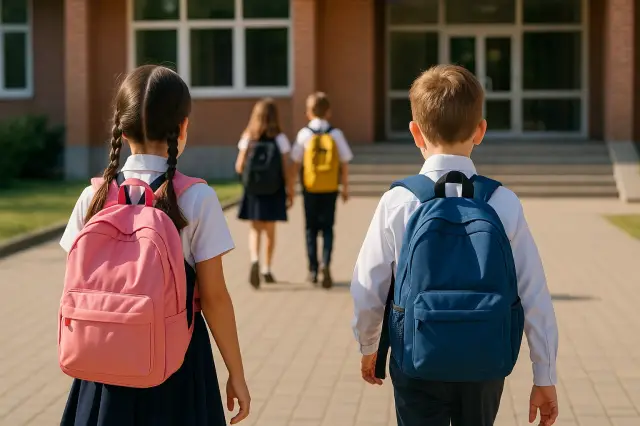
The return to classes in Chile in 2026 will mark the start of a new school year with significant adjustments to dates and educational methods. According to projections from the Ministry of Education (Mineduc), classes will begin between Monday, March 3rd and Monday, March 10th, 2026 , depending on the region.
In recent years, regional differences have become increasingly clear, taking into account climatic factors, geographical distance, and local needs. Thus, the north usually starts earlier, while the far south starts one or two weeks later.
You can review an updated summary in the article School Calendar Chile 2025 , which details how the dates are distributed according to each zone of the country.
Estimated school calendar for 2026 by region
Although the Ministry of Education will officially publish the 2026 school calendar during December 2025, a scheme similar to that of previous years is expected:
| Region | Classes begin | Winter break | End of classes |
|---|---|---|---|
| North (Arica, Tarapacá, Antofagasta) | March 3 | July 13-24 | November 27 |
| Center (Valparaíso, Metropolitana, O'Higgins) | March 5 | July 6-17 | December 4th |
| South (Los Lagos, Aysén, Magallanes) | March 10 | July 20-31 | December 11 |
This schedule may vary depending on local regulations, weather emergencies, or decisions made by educational authorities.
Changes and adjustments that the 2026 school year will bring
The return to classes in 2026 could be accompanied by innovations driven by the Ministry of Education and private schools, focused on improving coexistence, educational technology, and emotional well-being. Key points include:
Strengthening digital education: An increase in the use of interactive platforms and virtual resources is expected.
Flexible schedules: Some establishments will continue to apply schedules adapted to the local context.
School mental health programs: In response to the increase in student stress, workshops and spaces for psychological support will be implemented.
Promoting attendance: National campaigns will seek to reduce dropout rates, especially in secondary education.
These guidelines follow the line of changes mentioned in the article How artificial intelligence is transforming work in Chile , which also addresses digitalization in education and employment.
Tips for families before the start of classes
The start of the school year can be challenging for both parents and children, so good planning is key. Here are some practical tips:
Plan your school shopping in advance. You'll avoid price increases and long lines in February.
Adjust your sleep schedule one or two weeks before the start of classes to facilitate the adjustment.
Check last year's school supplies. Many can be reused.
Keep vaccinations and medical checkups up to date. These are common requirements for school-aged children.
Plan school routes and transportation. Especially in large cities like Santiago, Concepción, or Valparaíso.
At CalendarioChile.com/blog you can find more articles about education, family organization and school celebrations.
Educational trends that will shape 2026
Chilean education continues to transform, and 2026 will be no exception. These are some of the trends expected for the next school year:
Emotional education and school coexistence
The focus on social-emotional skills will be consolidated as part of the curriculum. Schools will be required to strengthen respectful and safe environments.
Increased use of artificial intelligence in the classroom
Applications that help personalize learning, correct texts, or teach languages will be common in both basic and secondary education.
Environmental education
Environmental awareness will continue to grow, with more programs related to recycling, clean energy, and climate change.
Extracurricular and recreational activities
After years of high academic workload, educational communities increasingly value spaces for rest, art, and sports as an essential part of comprehensive education.
Holidays and breaks in the 2026 school year
In addition to the winter holidays, the calendar will include other short breaks, such as the Easter holiday , National Holidays and administrative days.
The 2026-2027 summer break is expected to begin in mid- December 2026 and extend until the end of February 2027.
You can supplement this information in the Winter and Summer Holiday Calendar in Chile , where the breaks and holidays by region are detailed.
What to expect from Chilean education post-2026
The future of education in Chile is geared towards greater decentralization, pedagogical innovation, and technical training. Public policies will seek to balance educational quality with equitable access, especially in the regions.
The return to school in 2026 will therefore be an opportunity to renew commitments to teaching, adapt to technological changes, and strengthen the role of the educational community.