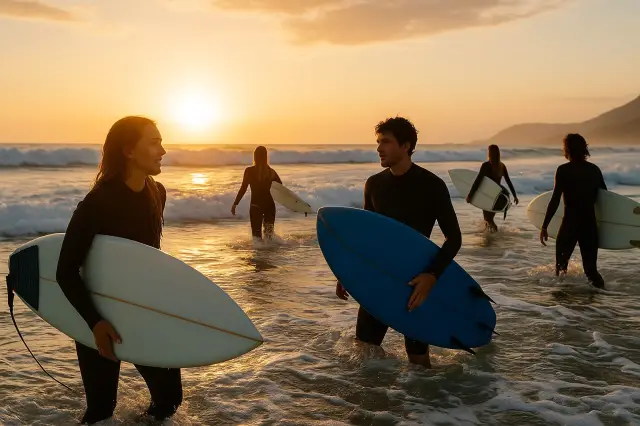
Summer 2026 in Chile promises to be one of the busiest seasons for outdoor sports enthusiasts. From the northern beaches to the southern rivers and mountains, the country offers a diverse range of landscapes ideal for surfing, kayaking, and climbing—three disciplines that combine nature, adrenaline, and well-being.
The rise of sports tourism in Chile has transformed many destinations into true adventure hubs. In this article from CalendarioChile.com, we explore the best routes, approximate prices, and recommendations for enjoying an active and sustainable summer.
Surfing in Chile: the best destinations to ride the waves this summer
Surfing is one of the most emblematic summer sports in Chile, thanks to its extensive coastline of more than 4,000 kilometers and ideal conditions for all levels.
Best beaches for surfing in 2026
Pichilemu (O'Higgins Region): The Chilean surf capital remains the epicenter of the sport. Punta de Lobos attracts national and international surfers with its perfect waves and bohemian atmosphere.
Iquique (Tarapacá Region): Ideal for those seeking warmth and consistent waves. Cavancha and Punta Gruesa are highly recommended for both beginners and professionals.
La Serena and Totoralillo (Coquimbo Region): Perfect for those who combine family vacations with surfing and coastal gastronomy.
Buchupureo and Curanipe (Maule Region): Less crowded spots, ideal for those seeking big waves and tranquility.
Tips for surfers in Chile
Wear a wetsuit, even in summer, as the water temperature is usually low.
Respect fishing and bathing areas.
Avoid the swells announced by the Navy.
👉 You might be interested in: Nature and coastal tourism in Chile for summer 2026
Kayaking in Chile: routes to explore rivers and lakes with unique landscapes
Kayaking is an excellent alternative for those who enjoy the water without needing waves. In Chile, the routes combine tranquility, contact with nature, and controlled adventure.
Top destinations for kayaking
Lake Villarrica (La Araucanía Region): One of the most beautiful places in the south, with views of the volcano and calm waters perfect for beginners.
Trancura River (Pucón): Offers intermediate and advanced level rapids, ideal for those seeking adrenaline.
Reloncaví Fjord (Lake Region): A spectacular journey through mountains, glaciers and marine wildlife.
Maule River (Maule Region): A classic for experienced kayakers, with fast sections and rural landscapes.
Safety tips for kayakers
Wear an approved life jacket and helmet.
Avoid browsing alone.
Respect the schedules and flow rates recommended by local guides.
Rock climbing in Chile: vertical experiences in a natural environment
Rock climbing has gained popularity in Chile as a summer activity that combines physical challenge, a connection with nature, and sustainable tourism. From the arid north to the southern valleys, there are natural climbing walls for all levels.
Top climbing areas in Chile
Las Chilcas (Metropolitan Region): Just one hour from Santiago, it has equipped routes and an active community of climbers.
Cochamó (Los Lagos Region): Known as "the Chilean Yosemite", it offers granite walls up to 1,000 meters high in a Valdivian rainforest environment.
Socaire and San Pedro de Atacama: Volcanic rock climbing with unparalleled desert landscapes.
La Mina (Valparaíso Region): Popular among those seeking technical routes and ocean views.
Basic equipment for getting started in climbing
Harness, helmet and specific shoes.
Certified dynamic ropes and carabiners.
Magnesium bag and gloves.
Respect the conservation rules and do not leave any waste.
Sports tourism growing in Chile 2026
The Ministry of Sport and Sernatur project that sports tourism will be one of the driving forces of summer 2026. The regions with the most growth are Coquimbo, La Araucanía and Los Lagos, thanks to their infrastructure and offering of sustainable experiences.
The increase in events such as surfing championships , guided kayak tours , and climbing festivals has boosted the local economy and positioned Chile as a world-class adventure destination.
Related: Festivals and cultural fairs in Chile 2026: dates, regions, and what not to miss
When and how to plan your sporty summer
The summer season in Chile runs from December to March. It's important to plan ahead, as many destinations fill up during January and February.
Recommendations:
Book accommodation at least one month in advance.
Hire services with guides certified by Sernatur.
Choose sustainable transportation and minimize waste.
In addition, you can combine your trip with local celebrations or holidays, taking advantage of the dates indicated in our 2026 holiday calendar .
Sport as a way to connect with Chile
Surfing, kayaking, or climbing in Chile is not only a way to exercise, but also a way to connect with nature and the country's identity . Every wave, river, or mountain reflects the diverse landscapes and cultures that make Chile a unique destination for active tourism.
Whether you're looking for adrenaline, a break from the daily grind, or simply new experiences, summer sports in Chile 2026 invite you to discover a country from a freer, more natural, and challenging perspective.