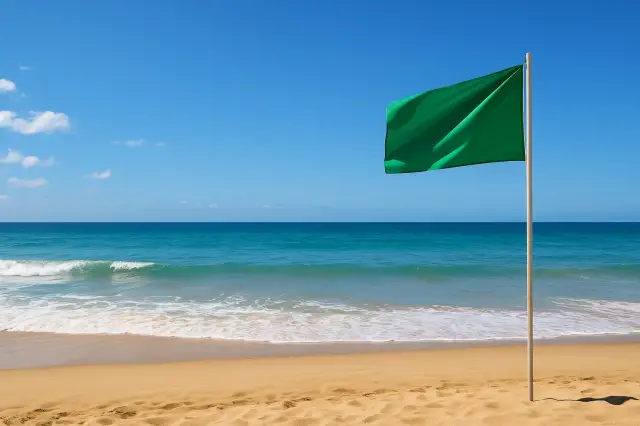
What does the green flag mean on Chilean beaches?
The green flag is the symbol all Chilean vacationers look for when they reach the coast. It indicates that sea conditions are safe for swimming , with low waves, no dangerous currents, and the presence of lifeguards in the area.
During the summer of 2026, the General Directorate of Maritime Territory and Merchant Marine (DIRECTEMAR) will renew its beach safety program, with patrols, updated signage, and special inspections in high-traffic tourist areas.
A beach with a Green Flag is not only suitable for swimming: it also guarantees that it meets standards of cleanliness, order, and maritime surveillance , ideal for families with children and national or international tourists.
How the green flag is determined in Chile
Every morning, lifeguard teams and harbor masters assess sea, wind, and tide conditions. If the environment is safe, they raise the green flag; if there are moderate risks, they use a yellow flag; and if swimming is prohibited, they use a red flag .
This system is used on the main beaches from Arica to Chiloé, and is updated throughout the day if weather conditions change.
Factors that determine the safety of the sea:
Wind intensity and wave height.
Presence of return currents.
Water quality and environmental cleanliness.
Rescue personnel available and operational.
Green Flag Beaches in Northern Chile 2026
Chinchorro Beach in Arica
Ideal for families and young children, Playa Chinchorro maintains its Green Flag status every summer thanks to its gentle waves and excellent facilities. It features a sea rescue center, showers, playgrounds, and bike paths , making it one of the safest beaches in northern Chile.
Cavancha Beach in Iquique
With warm waters and golden sand, Cavancha is one of the most popular urban beaches in the country. DIRECTEMAR usually flies the green flag for much of the summer, although caution is recommended on windier days.
In addition, its waterfront is ideal for enjoying fairs, restaurants, and sporting activities.
Hornitos Beach in Mejillones
Located 90 km from Antofagasta, Hornitos is one of the longest beaches in the north, with sections protected by cliffs that reduce the force of the wind. It's perfect for camping, kayaking, and enjoying the safe natural environment.
Green flag beaches in central Chile
Playa Blanca in La Serena
With calm waters and excellent tourist infrastructure, Playa Blanca is recognized annually with its Green Flag . It's perfect for swimming, paddleboarding, and family fun. The constant presence of lifeguards makes it one of the most recommended beaches for summer 2026.
We suggest you complement this visit with the astronomical activities that you will find in the article on astronomical phenomena in Chile 2026 .
Pichidangui Beach
This beach resort in the Coquimbo Region is synonymous with safety. Its enclosed bay protects against currents and allows you to enjoy the sea with complete confidence. It's a favorite for families and diving enthusiasts , with clear waters and pleasant temperatures.
El Canelillo Beach in Algarrobo
A classic of the Valparaíso Region. Surrounded by pine forests and light-colored sands, El Canelillo maintains its green flag status for much of the summer. From here, you can hike to Pájaros Niños Islet, a natural sanctuary ideal for photography and ecotourism.
Tunquén Beach
Further south, Tunquén combines natural beauty and tranquility. Although it lacks the infrastructure of other beaches, it often receives a green flag on calm sea days. It's perfect for those seeking a more secluded and eco-friendly setting.
Green flag beaches in southern Chile
Dichato Beach
In the Biobío Region, Dichato is one of the safest beaches in the south, with warm waters and gentle waves. Its family-friendly atmosphere and coastal walks make it a traditional destination for those seeking relaxation and nature.
Several traditional festivals are celebrated here, a topic you can learn about in detail in our article on traditional summer festivals in Chile 2026 .
Playa Blanca in Coronel
Another notable destination in Biobío. On good weather days, it maintains a green flag and has lifeguards, parking, and picnic areas. It's one of the cleanest beaches in southern Chile.
Cucao Beach in Chiloé
Although the waves are often strong, inland areas of Cucao have safe swimming areas and occasional green flags, especially in January and February. The natural setting of Chiloé National Park lends a unique appeal to those seeking controlled adventure.
zaqTips for enjoying safe beaches in Chile 2026
Check the flag every day before entering the sea, as it can change depending on conditions.
Respect the lifeguards' instructions , even if you see other people bathing.
Avoid inflatables and mattresses in areas open to the Pacific Ocean.
Protect the environment by using reusable bags and collecting your waste.
Check the daily reports from DIRECTEMAR or your local municipality to confirm the state of the sea.
If you're traveling with your family, consider checking out our article on safe, family-friendly beaches in Chile 2026 , which includes nearby accommodations and attractions.
Initiatives for clean and safe beaches in 2026
During the summer of 2026, several municipalities will implement "Clean and Safe Beaches" programs, in partnership with DIRECTEMAR, Sernatur, and environmental organizations. Their objectives include:
Certify beaches with the sustainable green flag.
Promote coastal environmental education .
Strengthen the presence of lifeguards and rescue points.
Control the use of single-use plastics.
These measures seek to maintain Chilean beach resorts as safe, sustainable, and attractive destinations for national and international tourism.