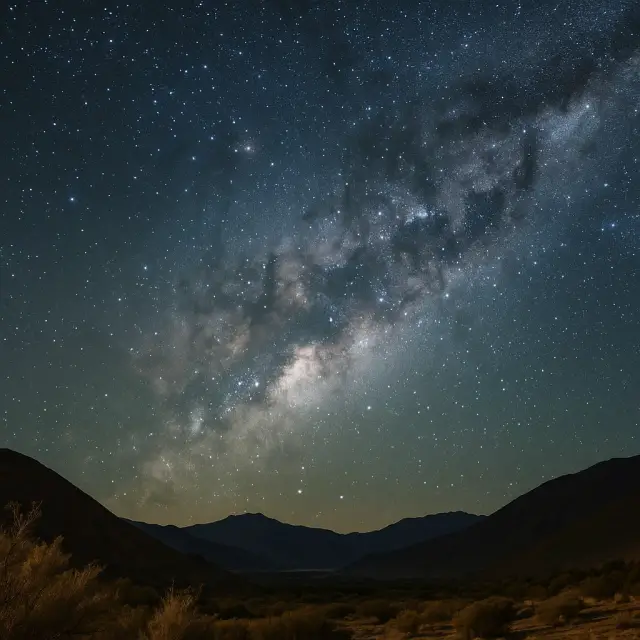
Chile is one of the best places on the planet for skygazing. Its privileged geography, with clear skies and low light pollution, makes the country a favorite destination for astronomy lovers. The year 2026 will be full of unmissable celestial spectacles that can be enjoyed from different corners of the country.
Below, we present the main astronomical phenomena in Chile in 2026 , their dates, and the best places to observe them.
Eclipses visible in Chile during 2026
Total lunar eclipse of March 3, 2026
The first major astronomical event of the year will be the total lunar eclipse on March 3. It will be visible throughout Chile, especially in the north and center of the country. For several hours, the moon will take on a reddish hue, known as the "Blood Moon."
Tips for observing it:
Optical instruments are not required, although a small telescope enhances the experience.
Look for places away from urban lights, such as the Elqui Valley or the Altiplano.
Check local weather conditions before the event.
Partial solar eclipse of August 17, 2026
This phenomenon will be visible from much of the country, although the degree of obscuration will vary by region. In regions such as Antofagasta and Coquimbo, an obscuration of up to 60% will be visible.
Recommendations:
Always use certified glasses to observe solar eclipses.
Take advantage of the tourist observatories in northern Chile, which often organize special events.
You can complement this information with the article on the calendar of eclipses and meteor showers in Chile 2025 .
Most notable meteor showers of 2026
Chile offers unique conditions for observing meteor showers. Several will peak in 2026 with excellent visibility.
Quadrantids – January 3-4
The first meteor shower of the year. In northern and central Chile, up to 80 meteors per hour can be observed.
Perseids – August 12 to 13
Although visible primarily in the Northern Hemisphere, the Perseids can also be partially observed from northern Chile. They often produce bright and colorful meteors.
Geminids – December 13-14
Considered one of the most active meteor showers of the year, the Geminids will offer up to 120 meteors per hour under clear skies. The north and center of the country are ideal for enjoying this spectacle.
If you're passionate about this type of event, we recommend visiting our article on meteor showers in Chile 2026 .
Supermoons and special moons
There will be several supermoons during 2026, moments when the natural satellite appears larger and brighter because it is at its closest point to Earth.
Important dates:
February 9: First supermoon of the year.
September 8: The largest and brightest of 2026.
In addition, in November you will be able to observe a blue moon , the name given to the second full moon within the same month.
Best places to observe the sky in Chile
Chile is considered the world capital of astronomy, thanks to its world-class observatories and clear skies. If you want an unforgettable experience, consider these destinations:
Coquimbo Region
Elqui Valley: home to tourist observatories such as Mamalluca and Collowara.
Vicuña and Paihuano: offer astronomical accommodations with telescopes and specialized guides.
Antofagasta Region
San Pedro de Atacama: the epicenter of Chilean astronomical tourism. The world's driest desert offers some of the clearest visibility on the planet.
Metropolitan Region
Santiago and surrounding areas: Although there is light pollution, there are spaces like the University of Santiago Planetarium and parks like Yerba Loca, ideal for occasional observation.