Photosynthesis is one of the most fundamental processes for life on Earth. It is the way that plants, algae and some bacteria use the energy of sunlight to convert it into chemical energy that supports almost all ecosystems on the planet. This process is not only crucial for the production of food and oxygen, but also has profound implications for the global carbon cycle and climate.
What is photosynthesis?
Photosynthesis can be defined as the process by which photosynthetic organisms use the energy of sunlight to convert carbon dioxide (CO2) and water (H2O) into sugars and molecular oxygen (O2). This process occurs in the chloroplasts of plant cells and in some bacteria that have photosynthetic pigments.
General Equation of Photosynthesis: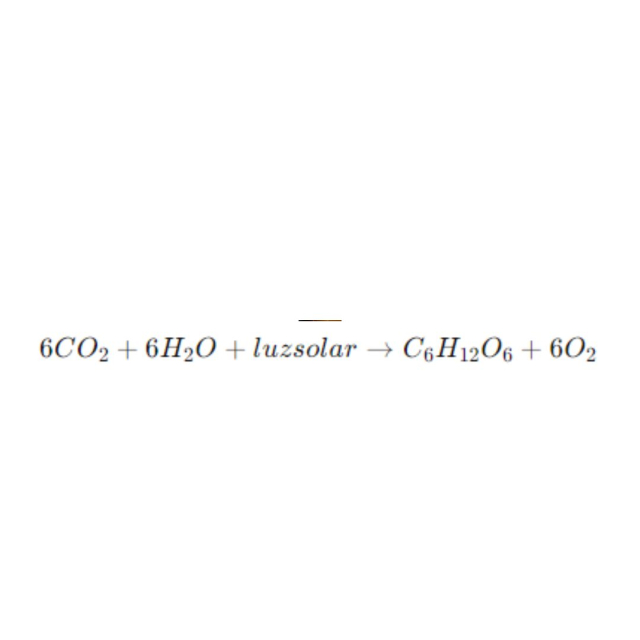
In this equation, carbon dioxide and water are combined using light energy captured by photosynthetic pigments, such as chlorophyll, to produce glucose (C6H12O6) and oxygen as a byproduct.
Phases of Photosynthesis
Photosynthesis can be divided into two main phases: the light phase (light-dependent) and the dark phase (light-independent or Calvin cycle).
Luminous Phase:
In the light phase, photosynthetic pigments in the thylakoids of chloroplasts capture energy from sunlight. Chlorophyll a and b are the most important pigments in this process, as they absorb light at specific wavelengths. Light energy is used to break down water into molecular oxygen, protons (H+), and electrons (e-). These energized electrons are transferred through an electron transport chain, thus generating adenosine triphosphate (ATP) and reduced nicotinamide adenine dinucleotide phosphate (NADPH), which are used in the dark phase for carbohydrate synthesis.
Dark Phase (Calvin Cycle):
In the dark phase, ATP and NADPH molecules produced in the light phase are used to convert atmospheric CO2 into glucose. This process takes place in the stroma of chloroplasts and follows a cycle of biochemical reactions known as the Calvin cycle. In this cycle, CO2 is fixed into a five-carbon molecule, ribulose-1,5-bisphosphate (RuBP), through a series of enzyme-catalyzed reactions. Finally, glucose and other organic molecules that the plant needs to grow and reproduce are produced.
Ecological Importance of Photosynthesis
Photosynthesis is crucial for life on Earth for several reasons:
Oxygen Production: It is responsible for the production of the oxygen we breathe. Without photosynthesis, the Earth's atmosphere would not have the level of oxygen necessary for aerobic respiration by most organisms.
Food Production: Most of the food we consume directly or indirectly comes from plants that perform photosynthesis. Agricultural crops depend on this process for their growth and development.
Carbon Cycle: Photosynthesis helps regulate the global carbon cycle by absorbing CO2 from the atmosphere. This CO2 is used to form plant biomass and eventually returns to the atmosphere through respiration and decomposition processes, thus completing the cycle.
Environmental Sustainability: Terrestrial and aquatic ecosystems depend on photosynthesis for primary production, which is the base of the food chain. Without photosynthesis, ecosystems would not be able to sustain the biological diversity and ecosystem services on which we depend.
Applications of Photosynthesis in Science and Technology
The understanding of photosynthesis has inspired various applications in scientific and technological fields:
Bioenergetics: Research on photosynthesis has inspired the search for methods to harness solar energy efficiently and sustainably, such as in the production of biofuels and bioinspired solar cells.
Agricultural Biotechnology: Improving the photosynthetic efficiency of crops is an important goal in modern agricultural biotechnology to increase crop yields and address the challenges of climate change and global food security.
Medicine and Health: The use of artificial photosynthesis is investigated for the production of bioactive compounds and medicines, as well as for tissue bioengineering and advanced medical applications.
Molecular Biology: The study of the molecular mechanisms of photosynthesis has provided crucial information about the structure and function of the proteins, enzymes and pigments involved in this process.
Challenges and Future of Photosynthesis Research
Although photosynthesis is a highly efficient process, it also faces challenges, especially in the context of climate change and environmental sustainability. Understanding how plants respond to changing environmental conditions and how photosynthetic processes can be optimized to improve food production and solar energy efficiency remains an active area of research.
The future of photosynthesis research includes exploring new biochemical and biotechnological approaches to improve photosynthesis, develop more resistant crops adapted to extreme climatic conditions, and advance bioenergy and the sustainable production of food and bioproducts.
Understanding how the mechanisms of photosynthesis work not only helps us appreciate the complexity of plant life, but also guides us toward innovative and sustainable solutions for the future.