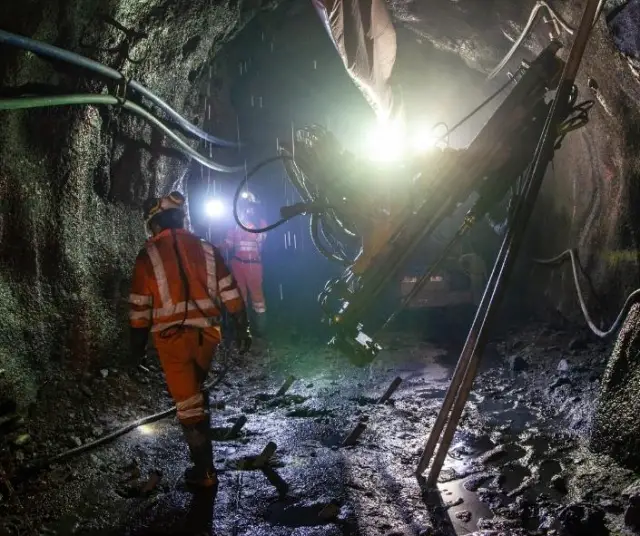
Chile, a country of spectacular geographical contrasts, is also known for its abundant natural wealth. Among the most precious resources is copper, which has boosted the Chilean economy for decades. Mining in Chile has been an integral part of the country's history and identity, but has also posed significant environmental and social challenges.
History of Mining in Chile
Mining in Chile has deep roots dating back to pre-Columbian times. Indigenous peoples such as the Incas and Mapuches already extracted minerals such as copper and gold from the earth. However, the true transformation of the Chilean mining industry occurred with the arrival of the Spanish colonizers in the 16th century. During the colonial era, Chile became one of the main suppliers of silver to the Spanish Empire, and mining became a fundamental part of the economy.
The exploitation of saltpeter, an essential component for the manufacture of fertilizers and explosives, became another pillar of the Chilean economy in the 19th century. The wealth generated by the saltpeter industry allowed Chile to finance its territorial expansion and develop key infrastructure, such as railways and ports.
As saltpeter began to decline in importance in the early 20th century, copper emerged as Chile's most valuable mineral resource. The Chilean Copper Company ( CODELCO ) was created in 1976 as a state company to manage the exploitation and export of this metal, further consolidating the importance of mining in the Chilean economy.
Economic Importance of Mining
Mining has been and continues to be a fundamental pillar of the Chilean economy. Chile is the largest copper producer in the world, with a significant share in global production. Copper represents approximately 60% of Chilean exports and a substantial part of the country's tax revenue. The mining industry is also an important generator of employment, directly and indirectly, providing work to hundreds of thousands of Chileans.
The success of Chilean mining is not limited to copper. The country is a major producer of other minerals, including lithium, molybdenum and iodine. Lithium, in particular, is a key mineral in the modern era due to its use in batteries for electric vehicles and electronic devices. Chile has vast lithium deposits, making it a major player in the global clean energy supply chain.
Social Challenges of Mining
Despite its significant contribution to the Chilean economy, mining has also posed significant social and environmental challenges. One of the most notable problems has been the inequality in the distribution of wealth generated by mining. Communities near mines have often not experienced equitable development, and the economic benefits of the industry have not reached everyone equally.
The migration of workers to mining areas has led to the creation of informal settlements, increasing pressure on public services and generating social tensions. Additionally, mining can have a negative impact on the health of workers and local communities, due to exposure to toxic substances and environmental degradation.
Environmental Challenges of Mining
Mining, by nature, involves the extraction of minerals from the earth, which can cause significant damage to the environment if not managed properly. Deforestation, soil erosion and water pollution are common concerns associated with mining activity. In Chile, mining has had an impact on areas of great ecological value, such as the Atacama Desert, where rich biodiversity is found.
Pollution of water resources is one of the most pressing environmental challenges. Mineral extraction often requires large amounts of water, and the release of toxic chemicals into water sources can damage aquatic ecosystems and affect communities that depend on these resources.
Advances in Sustainable Mining
Aware of the environmental and social challenges posed by mining, Chile has implemented a series of policies and regulations aimed at promoting more sustainable mining. This includes introducing stricter regulations on waste management, restoring degraded areas and protecting water sources. In addition, corporate social responsibility initiatives have been promoted that seek to improve the living conditions of communities near mining operations. These initiatives may include building local infrastructure, investing in education and health, and promoting local employment.
Technology also plays an important role in sustainable mining. The automation and digitalization of mining operations allows for greater efficiency and reduced risk for workers. Additionally, green mining, which focuses on the extraction of minerals with a lower environmental impact, is gaining ground in Chile.
The Challenge of Lithium and the Energy Transition
Lithium has become a strategic mineral in the transition towards a more sustainable economy and the electrification of vehicles. Chile has vast deposits of lithium in the Salar de Atacama, which puts it in a unique position in the race to secure the supply of this mineral.
Lithium extraction, however, poses significant environmental challenges. Exploiting this resource requires large amounts of water in an area that is already one of the driest regions in the world. Lithium extraction can also have an impact on local ecosystems and indigenous communities that depend on groundwater.
The challenge for Chile is to find a balance between the growing demand for lithium globally and the need to protect the environment and the rights of local communities. This requires the implementation of cleaner technologies and sustainable water resource management practices.
Mining and the Global Economy
Chile not only supplies its own economy with the mineral resources it produces, but is also an important player in the global market. Demand for copper, lithium and other Chilean minerals remains high worldwide, driven by the expansion of renewable energy, the electrification of vehicles and growing demand for technology.
The Chilean economy is, therefore, deeply linked to global mineral price cycles. Fluctuations in mineral prices can have a direct impact on the Chilean economy, making the country vulnerable to market swings.
As Chile looks to the future, it faces a number of key mining challenges. One of the most obvious challenges is the need to make mining even more sustainable from an environmental and social perspective. This includes the implementation of cleaner technologies, responsible water management and equitable distribution of economic benefits.
Another challenge is to diversify the Chilean economy to become less dependent on mineral price cycles. This implies the promotion of other sectors, such as technology, agriculture and tourism. Economic diversification can reduce Chile's vulnerability to mineral market fluctuations.