Chile, a long, narrow strip of land in southwestern South America, has witnessed the evolution of various civilizations over millennia. From ancient indigenous peoples to complex pre-Hispanic societies, Chile's ancient civilizations left a cultural, social and archaeological legacy that still endures.
The First Inhabitants: Hunters and Gatherers
The initial settlement of Chile dates back approximately 13,000 years ago, with the arrival of groups of hunters and gatherers. These first inhabitants lived in close contact with nature, depending on hunting animals and collecting wild fruits and plants for their subsistence. Among the most important archaeological sites of this era is Monte Verde, near Puerto Montt, which has provided evidence of early human presence on the American continent.
These nomadic groups developed stone and bone tools, and established temporary camps near water sources. Life was hard, but these first inhabitants showed a remarkable ability to adapt to the varied climates and geographies of the Chilean territory, from the Atacama Desert to the cold landscapes of the south.
Chinchorro Culture
Location and Period
The Chinchorro culture developed on the coast of the Atacama Desert, approximately between 7,000 and 1,500 BC. This civilization is known primarily for its funerary practices and advanced mummification techniques.
Mummification and Funeral Rituals
The Chinchorro are famous for being one of the first cultures in the world to practice deliberate mummification of their dead, long before the ancient Egyptians. They used complex techniques that included removing organs, drying the body, and applying a mixture of mud, ashes, and pigments to preserve the remains.
Despite living in one of the most arid regions in the world, the Chinchorro were expert fishermen and shellfish collectors. They took advantage of the resources of the Pacific Ocean, including fish, mollusks and algae. Their ability to adapt to their environment and utilize available resources was key to their survival and development.
Aymara Culture
Location and Period
The Aymara culture developed in the Andean highlands, covering parts of northern Chile, Bolivia and Peru. Its influence in Chilean territory extended mainly in the region of Tarapacá and Arica, from approximately 500 BC until the arrival of the Spanish in the 16th century.
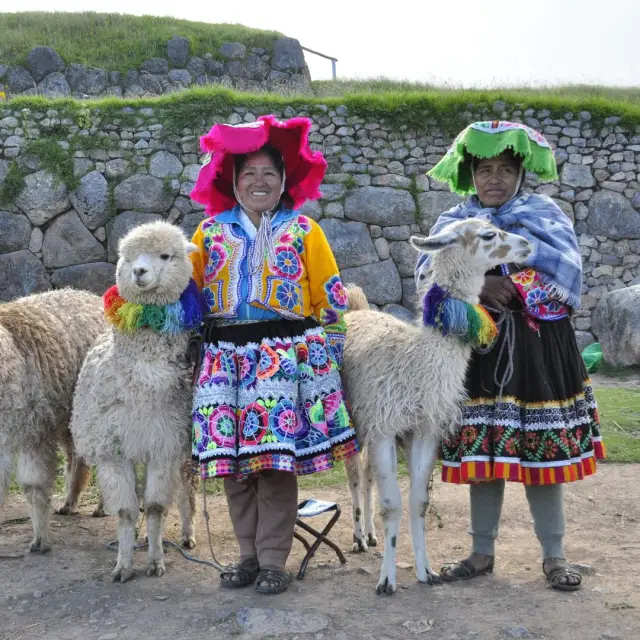
The Aymara were an advanced agrarian society, with a social organization based on ayllus, or extended family communities. They grew a variety of agricultural products, including potatoes, quinoa and corn, using terrace farming techniques and sophisticated irrigation systems. They were also skilled at raising llamas and alpacas, which provided them with wool, meat, and transportation.
The Aymara built impressive stone structures, including homes, temples, and ceremonial centers. Their art is characterized by the production of finely woven textiles, decorated ceramics and metal work, especially copper and bronze.
Mapuche Culture
Location and Period
The Mapuche culture developed in southern Chile, spanning from the Biobío River to the south of the island of Chiloé. This civilization has existed for millennia and continues to be a vital part of Chile's cultural identity today.
The Mapuche were an agrarian society, with an economy based on agriculture, hunting and fishing. They grew corn, potatoes, beans and other plants, and also domesticated animals such as the guanaco and the horse after the arrival of the Spanish. Their social organization was based on clans or extended families called lof, led by a lonko or chief.
The Mapuche worldview is deeply rooted in its relationship with nature and respect for the environment. They believed in a number of deities and spirits, including Ngenechén, the creator god, and Machi, a shamanic figure who acted as a healer and spiritual guide. Rituals and ceremonies, such as Nguillatun, were essential to maintain harmony with the cosmos.
Diaguita Culture
Location and Period
The Diaguita culture developed in northern Chile and parts of Argentina, mainly in the Elqui Valley and the Huasco Valley, approximately between 900 and 1,470 AD.
The Diaguita were an agrarian society that built impressive irrigation systems to grow corn, potatoes, pumpkins, and other agricultural products. They were also known for their skill in pottery, creating ceramics finely decorated with geometric motifs and zoomorphic figures.
Diaguita society was organized into chiefdoms, each led by a cacique or chief. They were skilled at making textiles and metals, especially gold and copper. Their culture is characterized by vibrant art and architecture, which included the construction of fortified villages.
The Inca Culture in Chile
The Inca Empire, originally from the Andean region of Peru, expanded its domain southward, reaching the northern region of Chile in the mid-15th century. The Inca influence was felt mainly in the areas of Atacama and Tarapacá.
The Incas established a series of administrative centers and communication routes, such as the Qhapaq Ñan or Inca Trail, which connected the different parts of the empire. They integrated the local populations into their administrative and economic system, imposing their language, Quechua, and their religion, centered on the worship of the sun and other deities.
The Inca influence in Chile left a significant legacy, including advanced agricultural techniques, such as terrace farming, and a highly efficient social and economic organization. Many elements of Inca culture fused with local traditions, creating a rich cultural heritage that endures to this day.
Understanding and preserving this legacy is crucial to appreciating the depth and richness of contemporary Chilean identity. These ancient civilizations not only speak to us of a distant past, but also connect us to the deep roots of a nation that values and celebrates its cultural diversity and historical heritage.