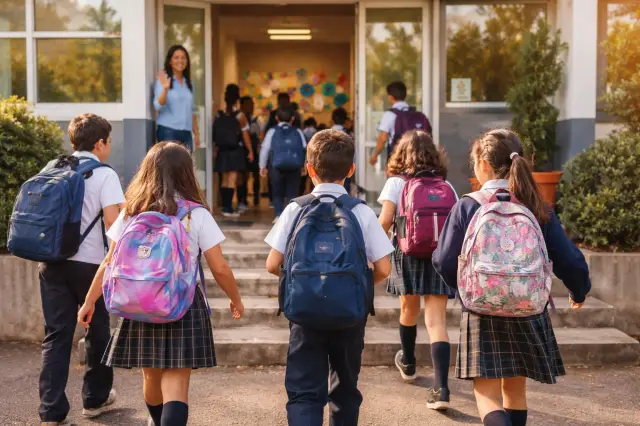
Every year, the start of the school year in Chile marks one of the most important moments for millions of families. In 2026, the Ministry of Education (Mineduc) announced a series of changes aimed at modernizing the education system, improving school climate, and facilitating the transition between summer vacation and the new academic year.
According to the first official announcements, the 2026 school calendar will have adjustments to start dates, new pedagogical guidelines, and a strong focus on the emotional well-being of students, a topic that has gained prominence in recent years.
When do classes start in Chile in 2026?
According to the Ministry of Education , the start of the 2026 school year is scheduled for the first week of March , although some regions could start earlier due to their climatic conditions or academic needs.
The tentative dates would be:
| Region | Start of classes | End of the first semester |
|---|---|---|
| Metropolitan | March 3, 2026 | July 10, 2026 |
| Valparaíso | March 3, 2026 | July 10, 2026 |
| Biobío and Ñuble | February 26, 2026 | July 5, 2026 |
| Los Lagos and Aysén | February 24, 2026 | June 30, 2026 |
| Arica and Parinacota | March 3, 2026 | July 10, 2026 |
These dates may vary depending on the establishment, so it is recommended to check directly with each school or high school.
What changes does the 2026 school calendar bring?
The 2026 school calendar in Chile incorporates new provisions focused on pedagogical flexibility and a balance between learning and well-being. Some of the main changes are:
Shorter winter break: Mineduc proposes reducing winter vacation days to reinforce essential learning.
Greater regional autonomy: Local Education Services will be able to adapt their dates to climatic and cultural realities.
Teacher self-care week: schools must include wellness and training days for teachers.
Interdisciplinary activities: project-based work will be promoted, connecting science, art and citizenship.
These measures seek to strengthen the quality of education and prevent school dropout, a challenge that remains present in several territories.
The challenges of returning to school in Chile
Going back to school involves more than just preparing backpacks and school supplies. In 2026, the main challenges revolve around:
School infrastructure: many public schools still require improvements in roofing, connectivity and accessibility.
Mental health and coexistence: psychological support programs in schools will be increased.
Family costs: the rise in prices for school supplies and uniforms continues to worry parents and guardians.
Digitization: the expansion of technological tools will continue to be key, with support from the "Connected Schools" plan.
Tips for an organized and stress-free return to school
Preparation can make a big difference. Here are some practical tips:
Get a head start on your back-to-school shopping. Take advantage of February's fairs and discounts to avoid last-minute expenses.
Establish gradual routines. Get children used to getting up early a week before the start.
Check the uniform in advance. Avoid surprises regarding size or wear and tear.
Set up a study space. A quiet, well-lit place improves concentration.
It promotes reading and light review. Reinforcing habits helps to get back into academic rhythm.
What to expect from the Chilean education system in 2026
The 2026 school year is framed within a context of educational transformation. The Ministry of Education plans to delve deeper into:
Updated curriculum: greater emphasis on digital skills, critical thinking, and sustainability.
School inclusion: integration programs for students with special needs.
Social-emotional learning: workshops on coexistence and conflict resolution.
Technical and vocational education: new alliances with companies to strengthen job training.
These policies aim for a more equitable education, adapted to the challenges of the 21st century.