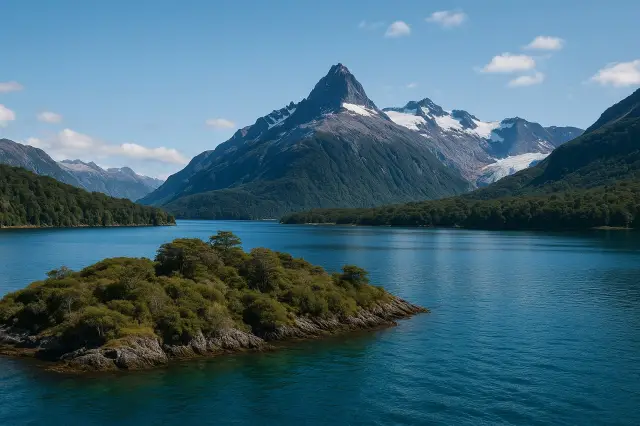
Chile is a land of contrasts where the Pacific Ocean holds largely unexplored secrets. Beyond famous destinations like Chiloé or Rapa Nui, there are undiscovered islands offering pristine landscapes, unique biodiversity, and authentic local culture . Many of these are accessible only by small boats or regional flights, making them true natural treasures.
Exploring these islands is not only an adventure experience, but also an opportunity to connect with unspoiled nature and communities that live in harmony with the sea and the land.
Little-visited islands in northern Chile
The north of the country, known for its deserts and clear skies, is also home to fascinating islands off its arid coasts .
Damas Island in the Coquimbo Region
Part of the Humboldt Penguin National Reserve , this island is a natural sanctuary where penguins, dolphins, and sea lions can be observed. Access is from Punta de Choros, and visits are regulated to protect its ecosystem.
Ideal for: marine wildlife observation and ecotourism.
Best time: spring and summer.
Tip: Book authorized tours in advance.
Choros Island and Chañaral
Very close to Isla Damas, these small islands are part of the same ecological system. They are perfect for those seeking short boat trips and direct contact with marine wildlife .
You can learn more about sustainable tourism in Chile on our blog:
👉 https://www.calendariochile.com/blog
Islands of central Chile: culture and nature
In the central area, the islands combine history, artisanal fishing and coastal landscapes that are still preserved without major urban interventions.
Santa María Island in the Biobío Region
Known for its fishing community and mining history, this island is an uncrowded destination ideal for those seeking tranquility and contact with local inhabitants.
How to get there: boat from Lota or Coronel.
Things to do: coastal walks, bird watching and tasting fresh seafood.
Fun fact: it was a place of political confinement during the 20th century.
Quiriquina Island
Located opposite Talcahuano, it houses a naval base and small coves. Its value lies in its natural landscapes and military history , with panoramic views of the Gulf of Arauco.
Southern islands of Chile: the end of the world in its purest form
In the far south, the Chilean archipelago becomes a labyrinth of channels, mountains, and glaciers. Here lie some of the country's most remote and little-known islands .
Navarino Island
Facing Ushuaia and near the legendary Cape Horn, Navarino offers one of the world's most challenging treks , the Dientes de Navarino . Its biodiversity and isolation make it a gem for adventure lovers.
Attractions: hiking, photography, endemic fauna and Yaghan culture.
Recommendation: travel with local guides to respect protected areas.
Wellington Island
With thousands of kilometers of rugged coastline, it is one of the largest and least populated islands in the country. Its landscape is characterized by fjords, mountains, and pristine forests.
Accessing it involves sea voyages from Puerto Edén or Puerto Natales, making the journey a true expedition.
Chilean islands with unique culture and traditions
Beyond their geography, many of these islands maintain their own traditions, legends, and festivities that reflect the country's cultural diversity.
On Santa Maria Island, the San Pedro festivities preserve the essence of fishing work.
On Isla Damas, the stories of sailors and local guides convey the ancestral connection with the sea.
On Navarino Island, the Yaghan people keep alive a fundamental part of the southern indigenous history.
Exploring these islands is also a way to get to know Chile from its coastal identity , far from mass tourism.
Recommended routes for responsible travel
Visiting less-traveled islands requires planning and respect for the environment. Here are some recommendations:
Book authorized tours and avoid leaving waste.
She prefers sustainable or community-run accommodations .
Check the weather conditions before sailing.
Respect wildlife and keep your distance in nesting areas.
Support the local economy by buying local artisan products and food.
Discover more tips for responsible travel in Chile on our blog:
👉 https://www.calendariochile.com/blog