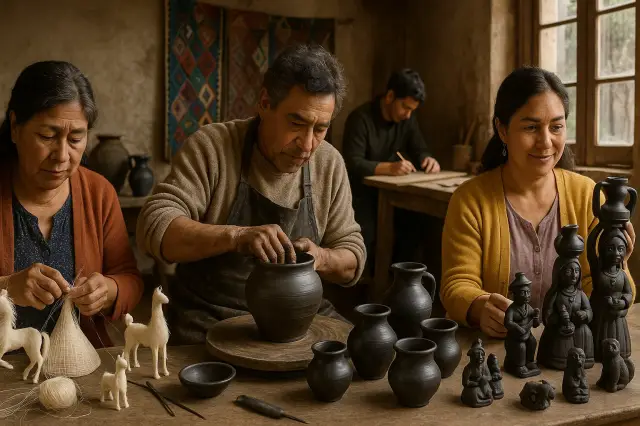
The creative economy in Chile has gone from being an emerging concept to a strategic pillar of regional development. Increasingly, local communities are finding in crafts, culture, and innovation a driving force for job creation, strengthening their identity, and promoting sustainable tourism.
According to the Ministry of Cultures, Arts and Heritage , this sector represents one of the areas with the greatest growth potential for the coming years, especially in regions with a strong cultural heritage. In fact, the recent Mapping of Cultural Assets for Creative Tourism (2025) identified more than 1,200 cultural ventures distributed throughout the country.
Chilean crafts , local gastronomy, design and digital industries are fundamental pillars of this new form of development.
What does creative economy mean?
The creative economy is based on the use of talent, creativity, and innovation as productive resources. It does not depend on large infrastructures or raw materials, but rather on the symbolic and cultural value that people generate through their work.
In Chile, this concept encompasses sectors such as:
Traditional crafts and trades
Design and fashion
Music, theatre and dance
Cinema and audiovisuals
Regional gastronomy
Cultural and heritage tourism
Digital production and video games
This diversification allows both large cities and small rural communities to actively participate in the creative ecosystem.
Regions where the creative economy flourishes
Chile has begun to recognize the value of its regions as creative territories . Each area of the country has a distinctive character that blends tradition, innovation, and a sense of belonging.
Los Ríos Region: crafts and sustainability
In Valdivia, Lanco, and Panguipulli, local cooperatives are integrating environmental sustainability with artisanal production. The use of natural fibers, recycled wood, and organic dyes has led to products that are now exported.
Coquimbo Region: cultural tourism and astro-entrepreneurship
Stargazing tourism, along with artisanal production rooted in Diaguita culture, has boosted the local economy. In places like Vicuña and Paihuano, pottery and weaving workshops are now offering tourist experiences for visitors.
Biobío Region: cultural industries and design
With its strong industrial heritage, the Biobío region has seen the emergence of creative hubs focused on design, music, and technological innovation . Spaces like the Concepción Creative District bring together more than 200 cultural ventures.
Los Lagos Region: identity and memory
Huilliche identity and woodcraft are pillars of local development. Projects like the Southern Artisans Network seek to revive ancestral techniques and strengthen rural tourism.
Craftsmanship and identity as a driver of development
Chilean crafts are one of the most visible expressions of the regional creative economy. More than just a product, they represent the memory of the people, their connection to nature, and their way of experiencing culture.
Notable examples:
Rari (Maule): artisans specializing in horsehair, declared Living Human Treasures .
Pomaire (Metropolitan Region): pottery tradition with heritage status and tourist potential.
Quinchamalí (Ñuble): black pottery recognized by UNESCO as Intangible Cultural Heritage.
These practices not only preserve culture, but also promote female entrepreneurship and economic autonomy in rural communities.
Entrepreneurship and cultural sustainability
More and more young people are choosing to create businesses based on local cultural identity . Fairs, digital platforms, and collaborative networks allow them to showcase products and services that were previously excluded from the market.
The Creative Economy in Regions program, promoted by the Ministry of Economy and the Council of Culture, seeks to:
Empowering cultural entrepreneurs
Facilitating financing and internationalization
Promote territorial collaboration networks
Promote creative and sustainable tourism
According to data from the 2025 Culture Funds , more than 60% of the creative projects funded come from regions outside Santiago, reflecting the boom in the sector.
Creative tourism in Chile
Creative tourism is emerging as a new way to travel and experience a country. Unlike traditional tourism, this approach encourages active participation in the local culture: cooking, weaving, carving, or learning traditional dances.
Featured destinations:
Chiloé: Mapuche Huilliche weaving and gastronomy workshops.
La Serena: wine routes and Diaguita pottery.
Valparaíso: tours of murals and urban art with local artists.
Aysén: photography and nature experiences with rural communities.
This trend not only generates income, but also enhances the living culture of Chile .
Innovation and digitalization of the sector
Digital transformation has also reached the creative world. Platforms like HechoenChile.cl and ArtesanosConectados allow for online product sales, connecting creators and expanding into international markets.
In addition, augmented reality initiatives, cultural podcasts, and virtual workshops are modernizing access to culture from the regions.
In this context, artificial intelligence has become a tool that enhances cultural management, the design of tourist experiences, and the promotion of local businesses, without replacing human creativity.
Challenges of the creative economy in Chile
Despite the growth, the sector faces significant challenges:
Digital connectivity gaps in rural areas
Lack of business training in cultural ventures
Difficulty in sustained financing
Limited international visibility of local products
Overcoming these barriers requires comprehensive public policies, coordination between regions, and a perspective that combines culture, education, and sustainable development.