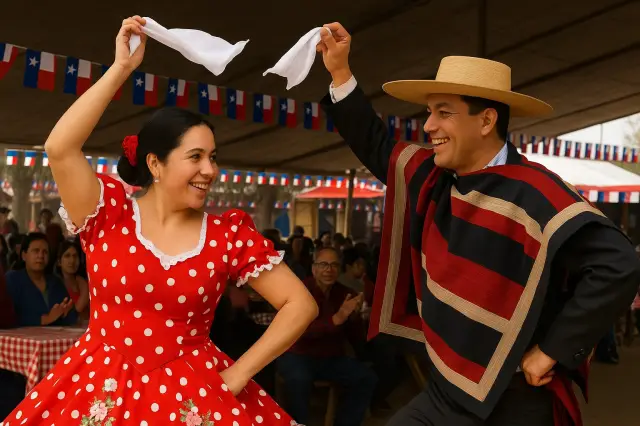
Chile's National Holidays are synonymous with traditions, traditional food, dancing, and family celebrations. Within these customs, music plays a central role, accompanying every fonda, ramada, and community gathering. The blend of cueca, cumbia, rancheras, and popular music reflects the country's cultural diversity and the festive spirit that characterizes September.
The cueca as a national symbol in September
The cueca, declared a national dance in 1979, is the undisputed star of the Fiestas Patrias (National Holidays). During the "dieciocho" (Eighteenth Day), it can be heard at restaurants, schools, official events, and family celebrations.
Their steps represent the courtship between a rooster and a hen.
The music combines guitar, accordion, tambourine and singing.
There are several variants: cueca nortina, cueca brava, cueca chilota, among others.
Regional and national championships are held in September, reinforcing its relevance as a cultural symbol.
The role of cumbia in the Chilean celebration
Along with cueca, cumbia has established itself as the most popular music danced in fondas and ramadas. Chilean bands such as Chico Trujillo, La Combo Tortuga, and Américo have popularized this genre, transforming it into an essential part of the festival's identity.
It is associated with joy and collective dance.
It is common to hear it after the cueca dance.
It often accompanies midnight in inns and private celebrations.
Chilean cumbia has been adapted to various styles, from tropical versions to fusions with rock and ska, ensuring its presence at any patriotic celebration.
Rancheras and corridos in Chilean fondas
Another genre that has found a place in the Fiestas Patrias (National Holidays) is rancheras. With Mexican influences, their popularity in southern Chile and rural areas is undeniable.
They talk about love, heartbreak and everyday life.
They are performed live in southern inns and rural areas.
Groups like Los Charros de Lumaco are key figures in these celebrations.
This type of music connects with the popular and the community, which reinforces the inclusive nature of the festival.
Popular music and radio hits in September
In addition to traditional genres, the fondas also feature the latest dance music. Reggaeton, Latin pop, and Chilean rock are also part of national playlists, especially during urban celebrations.
This shows how Fiestas Patrias adapt to new generations, maintaining the traditional but adding the contemporary.
The importance of music in Chilean cultural identity
Music during the Fiestas Patrias (National Holidays) is not just a source of entertainment, but a factor that unites Chileans around their identity. When dancing cueca, singing cumbia, or enjoying ranchera music, families share a common cultural language that transcends generations.