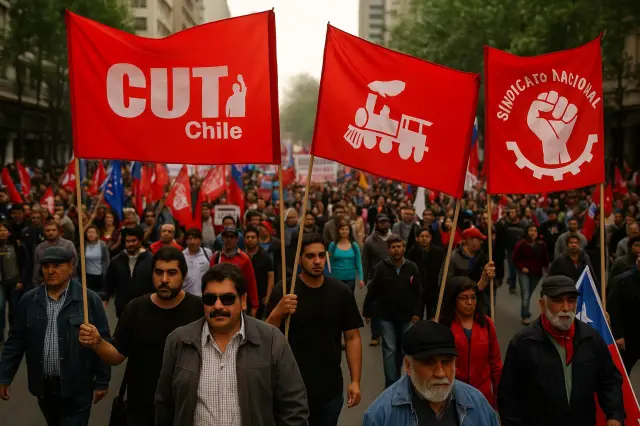
Labor Day in Chile is commemorated every May 1st , as in much of the world, as a tribute to the workers' struggles that made it possible to win fundamental labor rights.
Although its roots lie in the events in Chicago in 1886 , its history in Chile has its own development, marked by social movements, repression, labor reforms and union advances that shaped the country's labor reality.
This day not only celebrates rest or another holiday, but also represents the memory of the struggle for fair working hours, decent wages and humane working conditions .
How Labor Day originated in Chile
The first workers' organizations in the 19th century
During the 19th century, Chile underwent an economic transformation thanks to the mining boom and urban growth. In this context, the first workers' associations emerged, especially in the nitrate mines of the north and the workshops of Santiago and Valparaíso.
Workers faced long days of up to 14 hours , without job security or the right to unionize. In response, mutual aid societies began to form, which would later give rise to the first labor unions.
A similar reference on how historical events connect with Chilean labor history can be found in the article on Chilean historical events at www.calendariochile.com/blog .
Influence of international movements
May 1, 1886, in Chicago marked a turning point in world history with a massive strike demanding an eight-hour workday. News of this event reached Chile and motivated local labor movements to organize similar actions.
In 1890 , for the first time in Santiago and Valparaíso, workers commemorated International Workers' Day with marches and public gatherings. Since then, the date has become a symbol of unity and a demand for social rights.
The first May Day celebrations in Chile
First official act and state recognition
Although the first commemorations were repressed or ignored, in 1903 the first massive public event for Labor Day was held in Santiago .
In 1931, under the government of Carlos Ibáñez del Campo , May 1st was declared a national holiday by decree, officially recognizing its historical and social character.
Since then, the day has become a day of rest, reflection, and demonstration of labor demands.
The Chilean labor movement and its social impact
The strikes and victories of the 20th century
The 20th century brought important advances in Chilean labor legislation, driven by constant union mobilizations.
Among the most memorable are:
The strike at the Santa María School in Iquique (1907) , one of the most painful workers' tragedies.
The emergence of the Central Union of Workers (CUT) in 1953, as the national voice of the workers.
The labor reforms of the 1960s and 1970s , which strengthened unionization and the right to strike.
These milestones consolidated the identity of the Chilean labor movement as a protagonist of the country's social changes.
You can learn more about similar commemorations in the article on holidays and important days in Chile at CalendarioChile.com .
Labor Day during the military dictatorship
During the military regime (1973–1990), May Day celebrations were banned or severely controlled.
The unions were dismantled, many leaders persecuted, and labor freedoms restricted. Nevertheless, workers continued to commemorate the day symbolically, sometimes in clandestine meetings or religious ceremonies.
Only with the return to democracy in the 1990s did Labor Day regain its public and protest character , once again filling the streets with marches and rallies.
How is Labor Day celebrated today in Chile?
Currently, May 1st is a mandatory holiday , which means that businesses must close and workers have the right to rest.
In the main cities, events, marches, concerts, and job fairs are held, organized by unions and trade associations.
Modern commemorations not only look to the past, but also pose new job challenges:
Gender pay gap.
Informal employment and teleworking.
Digital rights and the right to disconnect from work.
Social security and decent pensions.
These discussions keep alive the essence of Labor Day in Chile , reminding us that labor achievements can always be improved.