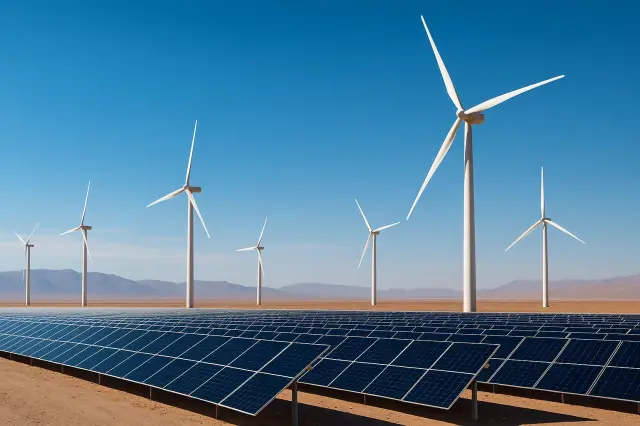
Chile has become a regional leader in clean energy , driving projects that position it among the most advanced countries in South America in sustainability and energy transition. Its diverse geography, with one of the sunniest deserts in the world and constant winds in the south, gives it unique natural advantages.
According to the Ministry of Energy , over 60% of installed capacity now comes from renewable sources, a figure that continues to grow each year. This shift is the result of strong public policies, foreign investment, and a forward-looking vision focused on green development .
More information about sustainable initiatives can be found on our environment blog .
The pillars of the Chilean energy revolution
Solar energy in the north of the country
The Atacama Desert has become the epicenter of solar energy in Latin America. With more than 3,000 hours of sunshine per year, this area allows for low-cost energy generation with minimal environmental impact.
Among the most outstanding projects are Cerro Dominador —the first solar thermal plant in Latin America— and the Sol del Desierto photovoltaic park in Antofagasta, which supplies thousands of Chilean homes.
Solar energy has not only transformed the energy matrix, but also the communities in the north, generating local employment and training in sustainable technology.
Wind energy in southern Chile
The southern region, especially the Magallanes and Aysén regions, harnesses strong winds to generate clean electricity. Wind farms like San Pedro and Tolpán Sur demonstrate the potential of this energy source, capable of supplying large urban centers without pollution.
In addition, wind energy is complemented by the development of hybrid projects that combine wind and sun, increasing the efficiency and stability of the national energy system.
The rise of green hydrogen as an engine for the future
One of the greatest challenges of the 21st century is replacing fossil fuels. In this context, Chile aims to become a global exporter of green hydrogen , an energy source produced from water and renewable electricity.
Regions like Magallanes and Antofagasta are leading the way in trials and pilot plants. International companies are already investing in the area, and the government projects that by 2030 the country will produce the cheapest hydrogen in the world .
Green hydrogen will not only be key to decarbonizing industries such as transport or mining, but will also strengthen the Chilean economy and energy independence.
You can read more about the environmental policies that accompany this transition in our articles on sustainability .
Technological advances and citizen participation
The success of clean energy in Chile is not solely due to investment. There has also been a strong commitment from universities, startups, and local communities that are driving technological solutions and community-based distributed generation projects.
Programs like “Energy Commune” promote the use of solar panels in homes, schools and municipalities, fostering energy autonomy and environmental education.
Challenges and opportunities towards 2030
Although the progress is remarkable, challenges remain. The electrical infrastructure needs to be expanded to transport energy generated in isolated areas to major consumption centers. Furthermore, the intermittent nature of solar and wind power necessitates greater investment in storage systems, such as lithium-ion batteries or hydrogen fuel cells.
Chile must also strengthen its environmental legislation, ensure a just transition for workers in fossil fuel industries, and continue to promote innovation in energy efficiency.
Even so, the future is promising: international organizations recognize Chile as one of the countries best positioned to lead the energy transition in Latin America.
Social and environmental benefits of energy transition
The expansion of clean energy brings benefits beyond economic savings.
Among the most important are:
Reduction of CO₂ emissions and improvement of air quality.
Green job creation , especially in extreme regions.
Energy decentralization , promoting regional autonomy.
Attracting foreign investment and strengthening the country's image.
These advantages solidify Chile as a model of sustainability and responsible growth.
Chile, a regional model in energy transition
While other countries are still debating how to replace coal and oil, Chile is already moving towards a clean energy model. Its combination of public policies, technological innovation, and social commitment positions it as an environmental leader in South America .
The challenge in the coming years will be to maintain this momentum and transform the energy matrix into a source of national pride and an engine of sustainable development .