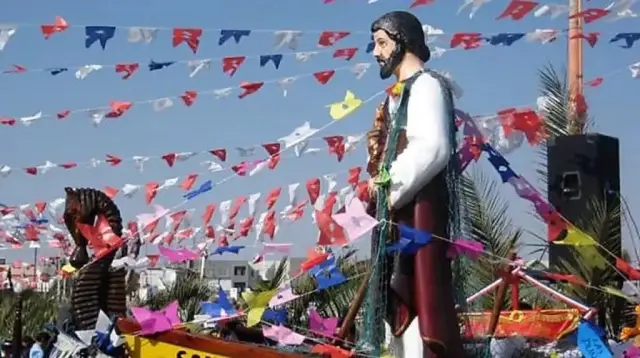
The Feast of Saint Peter in Chile , celebrated every June 29, is one of the most emblematic and deep-rooted religious traditions in the country's coastal communities. This holiday pays homage to Saint Peter , patron saint of fishermen, and combines Catholic devotion with the cultural practices of maritime regions. In cities such as Valparaíso, Coquimbo, Iquique, San Antonio, and Chiloé, the day is celebrated with a fervor that unites spirituality, tradition, and community into a single expression of faith.
During this holiday, the inhabitants of coves and ports give thanks to the sea for its resources and ask for divine protection for their fishing activities. Masses, maritime processions, folklore performances, and fairs are organized, where seafood and local crafts take center stage. The participation of fishing families and thousands of visitors turns this celebration into a highly significant social and cultural event, strengthening community ties and highlighting the important role of artisanal fishing in Chilean identity.
Origin and meaning of the Feast of Saint Peter
The figure of Saint Peter in Christian tradition
Saint Peter was one of the twelve apostles closest to Jesus Christ. Before becoming a fisher of men, he was a fisherman by trade, which creates a strong connection with those who practice this work today. According to the Gospels, he was chosen by Jesus to be the "rock" upon which the Church would be built, thus becoming the first Pope in history. This past as a fisherman and his role as a spiritual leader make Saint Peter a symbol of guidance, strength, and faith for coastal communities.
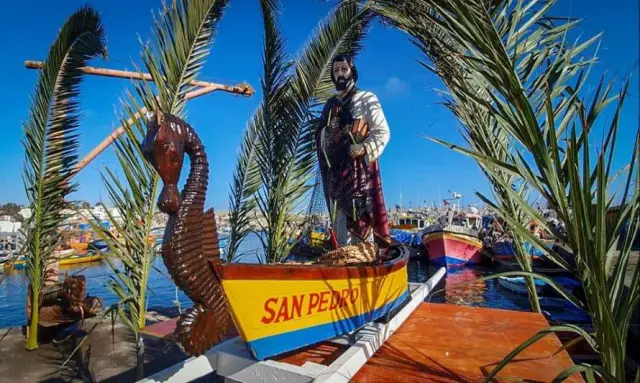
Devotion to Saint Peter is expressed not only through prayers and processions, but also in the way people pray to him before setting out to sea. Many Chilean fishermen keep images of the saint in their boats and homes as protective amulets, in a blend of religiosity and deeply rooted popular tradition.
The roots of the holiday in Chile
The tradition arrived in the Americas with the Spanish colonizers and was quickly adopted by the coastal communities. In Chile, where the coastline stretches for more than 4,000 kilometers, fishing has always been an essential activity, and with it, the cult of Saint Peter became consolidated as part of the national festive calendar. Over the years, the festival was enriched with local elements, such as Chilote music, traditional boats, seafood cuisine, and traditional dances, generating a unique cultural identity in each coastal region.

How is the Feast of Saint Peter celebrated?
Mass on board: a floating act of faith
One of the most anticipated and emotional moments of the Feast of San Pedro is the Mass on board , a religious ceremony held at sea. A priest boards one of the largest vessels, decorated with flowers, garlands, saints, and Chilean flags, and performs Mass from there. The other vessels—from small boats to fishing boats—form a convoy that surrounds the main barge, creating a striking and symbolic image.
This rite represents the blessing of the sea, the protection of fishing, and a tribute to those who have lost their lives in the ocean. In some towns, wreaths of flowers are thrown into the water in memory of the deceased fishermen, a gesture that blends grief and hope. Religious songs and community prayers transform the mass into a space for spiritual contemplation and collective unity.
Maritime and land procession
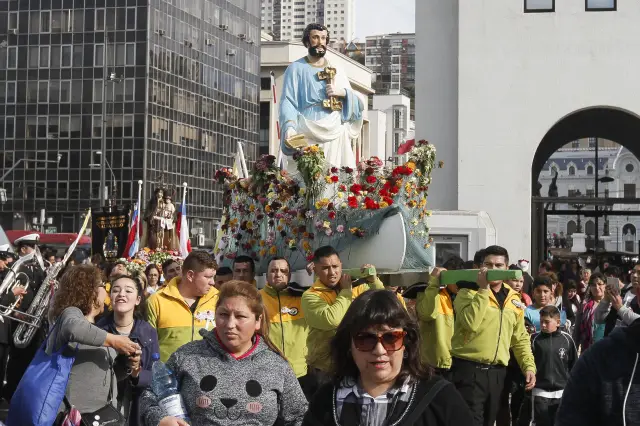
After Mass, a maritime or land procession takes place, depending on the weather and local geography. The figure of Saint Peter is placed on an elaborately decorated vessel and transported across the sea, escorted by dozens or even hundreds of boats honking horns, ringing bells, and waving flags. In other cases, the procession continues on land, where the image travels through the streets near the port accompanied by bands, dancers, devotees, and tourists.
This procession is not only a liturgical act, but also a spectacle that reinforces the community's seafaring identity. The massive participation, collective joy, and solemnity of the event make it one of the most anticipated of the year for those who live by the sea.
Clothing, music and gastronomy
During the festival, it's common to see participants dressed in traditional clothing: fishermen in sailor suits or naval uniforms, women in traditional dresses, and children in festive attire. Local bands play cuecas, folk songs, religious marches, and fishing folk songs , livening up every part of the event.
Food is another central pillar. Typical dishes are prepared such as conger eel stew, fried fish, seafood empanadas, sopaipillas, ceviches, and mariscos . These delicacies not only nourish the body but also celebrate the richness of the Chilean sea and the skill of its local chefs.
Cities and coves where life is most intense
| City/Cove | Main activities |
|---|---|
| Valparaíso | Maritime procession, craft fair, mass at the port |
| Coquimbo | Floating Mass, parades, and food fair |
| Saint Anthony | Parade of boats, religious songs |
| Chiloé (Dalcahue) | Rowing procession, traditional foods and folk music |
| Iquique | Boat decoration, open-air mass |
Each of these towns contributes its own distinctive touch to the celebration. In Chiloé, for example, many of the boats participating in the procession are handmade by the fishermen themselves, using techniques passed down from generation to generation. In Valparaíso, the festival coincides with cultural events that attract thousands of visitors, reinforcing the tourist and heritage value of the holiday.
Cultural and economic importance of the celebration
The San Pedro Festival represents a pillar of Chilean coastal identity . It is an opportunity for communities to proudly showcase their culture, customs, and crafts. Economically, the celebration boosts local commerce: fishermen, artisans, chefs, musicians, and entrepreneurs offer their products and services, benefiting the entire fishing industry.
The event also attracts national and international tourists interested in experiencing an authentic and meaningful experience. The festival also serves an educational purpose, allowing younger generations to learn about and appreciate the legacy of their ancestors.
Why is it important to preserve this tradition?
Strengthens local identity: connects people to their history, their environment, and their beliefs.
Protect intangible heritage: traditions like this deserve to be recognized and protected for their symbolic value.
It promotes education and cultural tourism: it is a tool for learning and sustainable economic development.
Create community cohesion: strengthen ties between neighbors, families, and generations around a common symbol.
Frequently asked questions about the Feast of Saint Peter
Who was Saint Peter and why is he the patron saint of fishermen?
Saint Peter was one of Jesus' first disciples and a fisherman by trade. His story inspires maritime communities, who venerate him as a spiritual guide and protector of the sea.
Where is mass held on board in Chile?
The mass on board is celebrated in several cities such as Coquimbo, San Antonio, Valparaíso, and Chiloé. It is one of the most moving events of the festival, with decorated boats and massive participation.
What kind of boats participate in the procession?
From small boats to large fishing boats, all are decorated with flowers, flags, garlands, and religious elements, reflecting the ingenuity and devotion of their owners.
Is this an activity open to the public?
Yes. Most activities are open to the community and visitors, who can join in the Mass, processions, fairs, and shows free of charge.
What other activities are done during the day?
In addition to religious ceremonies, there are seafood fairs, folk games, cultural workshops, nautical competitions, folklore displays, and tourist events.
A tradition that sails with the Chilean soul
The Feast of San Pedro in Chile is one of those celebrations that manages to bring together spiritual, cultural, and communal aspects in a single day. Through mass on board, processions, music, food, and collective gatherings, a living heritage that continues to beat strongly on the shores of the Pacific is passed on. Participating in this celebration is not just about attending a religious event, but also about experiencing the country's maritime essence and connecting with the human richness that flows from its coves to the world.