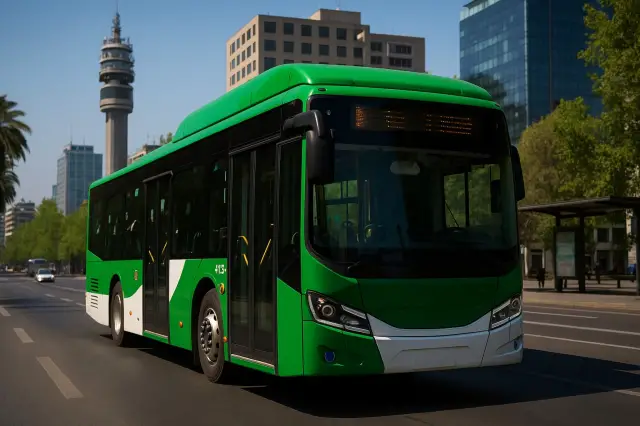
Electric mobility in Chile has become one of the most relevant topics in recent years. From public transport buses to shared scooters, Chilean cities are undergoing a quiet transformation that points towards a cleaner and more sustainable model.
The concept of electric mobility encompasses all modes of transport that run on electricity: cars, buses, bicycles, scooters, and even trains. This shift implies not only a technological transition but also a new way of thinking about the city, energy, and people's relationship with their environment.
According to figures from the Ministry of Energy , Chile aims for 100% of urban public transport to be electric by 2040 , an ambitious goal that aligns with international commitments to reduce emissions.
👉 You can read more about the country's environmental commitments in other articles on the site, such as World Environment Day in Chile .
Chilean cities that are leading the way in electric mobility
Santiago, a pioneer in electric buses
The capital has been a pioneer in Latin America by incorporating one of the largest fleets of electric buses on the continent . Currently, more than 2,000 units operate within the Metropolitan Mobility Network system, connecting districts and significantly reducing noise and pollution.
These buses, of Chinese origin and assembled with domestic technology, mark a milestone by enabling cleaner, more comfortable, and more efficient public transportation. The operational savings are also significant: it is estimated that an electric bus can reduce maintenance costs by up to 60%.
Antofagasta and the mining drive towards clean energy
In the north, the Antofagasta region has begun adopting electric vehicle fleets in mining companies, integrating sustainability into a sector historically associated with high energy consumption. Electric trucks and fast-charging systems at mining sites are part of this new reality.
Valdivia and the green south
In the south, Valdivia and other cities like Puerto Varas are investing in electric bicycle and sustainable taxi projects. These municipalities are seeking to position themselves as hubs of environmental innovation, reinforcing their identity as green cities.
Electric cars in Chile: advantages and challenges
Electric car sales in Chile have grown steadily. In 2025 alone, the market exceeded 5,000 units sold , driven by benefits such as exemption from the green tax and a reduction in the cost per kilometer traveled.
Key advantages
Cost savings: charging an electric car costs up to 70% less than filling a gas tank.
Less maintenance: they do not require oil, filters or parts that wear out with combustion.
Sustainability: zero local emissions and direct contribution to decarbonization.
Comfort and silence: the ride is smoother, quieter and vibration-free.
The main challenges
High initial cost: although prices have come down, they are still more expensive than conventional vehicles.
Limited infrastructure: although there are more than 800 charging points in Chile, their distribution is still uneven.
Consumer education: many drivers are unaware of the real advantages of electric mobility.
On the CalendarioChile.com blog you can also read other articles about how technological innovation is transforming Chilean urban life.
Electric micromobility: the short-distance revolution
In recent years, electric scooters and bicycles have become part of the everyday landscape in cities like Santiago, Viña del Mar, and Concepción. This phenomenon is known as electric micromobility , and it offers a practical solution for the so-called "last mile"—those journeys that complement public transportation.
Private companies have promoted this system with models of rental by the minute or monthly subscription. But beyond being a trend, micromobility plays a social role: it reduces traffic congestion and promotes a more active lifestyle.
Charging infrastructure: the big challenge for 2030
The growth of electric mobility depends on one key factor: infrastructure. Without enough charging stations, the enthusiasm may remain just that—enthusiasm.
The Ministry of Energy and the Energy Sustainability Agency are currently promoting the "Electric Routes" program, which seeks to install fast charging stations along Route 5 South and the country's main tourist corridors.
Thanks to this effort, it is now possible to travel by electric car from Arica to Puerto Montt with intermediate stations approximately every 100 kilometers.
Types of chargers
| Type of load | Estimated time | Typical location |
|---|---|---|
| Slow charging (level 2) | 4 to 8 hours | Homes and parking lots |
| Fast charging (level 3) | 30 to 60 minutes | Public stations, highways |
| Ultra-fast | 10 to 15 minutes | Intercity routes, terminals |
Renewable energy and electric mobility: a strategic alliance
The environmental value of electric mobility depends directly on how the electricity is produced . In Chile, more than 60% of the energy already comes from renewable sources—mainly solar and wind—making the country a success story in the region.
This connection between clean energy and electric transport multiplies the positive impact: fewer emissions, less dependence on imported fuels and greater energy resilience.
The CalendarioChile.com blog has also covered topics related to renewable energy and its influence on sustainable development.
Public policies and goals for electric mobility in Chile
The National Electromobility Plan 2022–2040 establishes a clear roadmap:
By 2035 , all new sales of light and medium vehicles must be zero emissions .
By 2040 , all urban public transport will be electric.
By 2050 , Chile aims to be a carbon neutral country.
These policies are accompanied by tax incentives, technical training programs and funds for research in energy storage and lithium batteries, a resource of which Chile is one of the world's leading producers.
Civic education and a culture of sustainable mobility
No technological transformation is complete without a cultural shift. Universities, municipalities, and citizen organizations are already working on road safety campaigns, electrical maintenance workshops, and sustainable innovation fairs.
For example, the "Move Electric" program, developed in conjunction with Chilean universities, promotes free testing of electric scooters and cars in local communities, bringing this technology closer to people.
Projections for 2025 and beyond
All indications are that electric mobility in Chile will continue to accelerate. The arrival of more affordable vehicles , the installation of new public charging stations , and the integration of residential solar energy will drive the growth of this ecosystem.
The urban transport of the future will be quieter, smarter, and more connected. Chilean cities, from Santiago to Punta Arenas, are already moving toward that goal.