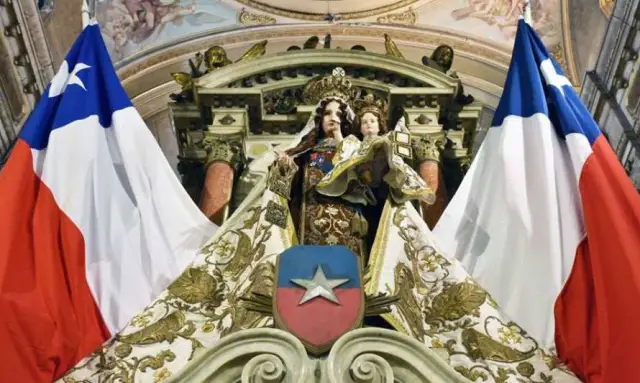
The Feast of Our Lady of Mount Carmel in Chile , celebrated every July 16 , is one of the most significant and heartfelt religious holidays on the national calendar. The Virgin of Mount Carmel, officially recognized as the Patron Saint of Chile , represents a symbol of unity, national identity, and profound faith for millions of Chileans. Her image has accompanied the country through historic moments, especially during the independence process, and continues to be a source of spiritual inspiration for believers of all ages.
During this day, numerous religious, cultural, and civic activities take place throughout the country. From solemn processions, masses, and novenas to military parades, folk dances, and community celebrations in towns and cities, devotion to the Virgin of Carmen is manifested with strength and emotion. This article explores how this important date is celebrated in Chile, its history, and the profound significance it holds in the lives of those who worship her.
History and significance of the Virgin of Carmen in Chile
Patron Saint and General of the Armed Forces
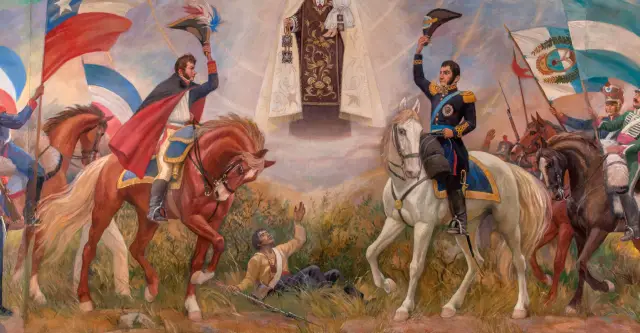
The veneration of Our Lady of Mount Carmel in Chile has deep religious and patriotic roots. She was proclaimed Patron Saint of Chile in the 19th century, after leaders like Bernardo O'Higgins entrusted the liberation army to her protection during the War of Independence. The victory in the Battle of Maipú , which consolidated national independence, was attributed by many to her divine intervention.
In recognition, the Virgin was officially declared General and Patron Saint of the Armed Forces . Since then, her image has been present in official ceremonies, churches, schools, barracks, and Chilean homes, becoming a spiritual symbol that transcends generations and social classes.
How the Day of the Virgin of Carmen is celebrated in Chile
Religious acts and solemn masses
Every July 16th, thousands of faithful attend solemn masses celebrated throughout the country, the most emblematic of which is held at the Maipú Votive Temple in Santiago. This national ceremony brings together civil, military, and religious authorities, as well as citizens, in an act of faith and gratitude to the Virgin.
During the days leading up to the celebration, novenas are held with prayers, reflections, and songs, spiritually preparing the communities. Altars are decorated with white flowers, candles, and patriotic elements, and the faithful proudly wear scapulars as a symbol of protection.
Processions and pilgrimages
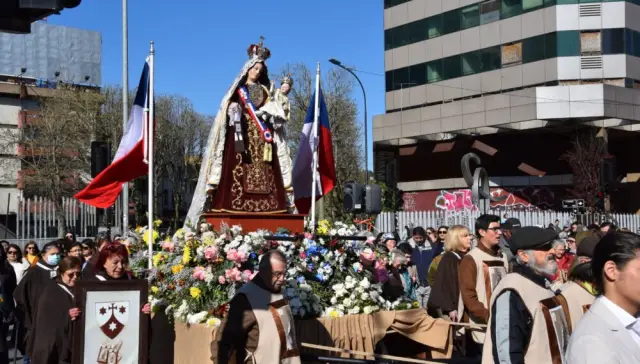
Processions are one of the most visible expressions of devotion. In many cities and towns, the image of the Virgin is carried on a float, accompanied by faithful who sing, pray, and walk in her honor. One of the most notable events is the Fiesta de La Tirana , in the Tarapacá region, where thousands of pilgrims gather to pay homage with dance, music, and colorful costumes.
It is also common to see pilgrimages organized by parishes, schools, or communities, in which people walk for miles to keep promises or express gratitude for favors granted.
Participation of the Armed Forces
Due to her title as Patron Saint of the Armed Forces, the July 16th celebration includes civic-military parades attended by members of the Army, Navy, Air Force, and Carabineros. These events are carried out with solemnity and respect, highlighting the historical and spiritual importance of the Virgin of Carmen in the formation of the country.
The parade in front of the Maipú National Shrine is especially significant, as it symbolizes the union of faith and commitment to the nation.
Local celebrations and popular festivals
In towns like Cauquenes , Chillán , San Fernando , and La Tirana , the Day of Our Lady of Mount Carmel becomes a truly popular festival , where religious and cultural aspects merge. Fairs, dance performances, concerts, processions, and traditional dishes are organized, creating spaces for community gatherings.
These local celebrations are organized by parish committees, municipalities, or devotional groups, and are an opportunity to preserve traditions, strengthen a sense of community, and renew faith.
Regions of Chile with notable celebrations
| Region | Featured celebration | Main details |
|---|---|---|
| Tarapacá | Festival of La Tirana | Religious dances, devotional music and pilgrims |
| Metropolitan | Mass at the Votive Temple of Maipú | National event with the participation of authorities |
| Maule | Cauquenes patron saint festival | Processions, masses and family celebrations |
| Ñuble | Festivities in Chillán | Religious fairs and expressions of local devotion |
| O'Higgins | Celebration in San Fernando | Community altars and traditional fairs |
Symbolic elements of the festival
Scapular of Our Lady of Mount Carmel : a small religious object that represents the Virgin's promise of protection. It is worn by millions of Chileans as a sign of faith and spiritual commitment.
Religious dances : especially present in the north, such as Chinese or Moreno dances, where devotees offer dances to the Virgin as a form of prayer.
White and light blue flowers : colors that reflect purity, peace, and the Virgin's connection to her homeland.
Liturgical and folk music : from religious chants to Chilean melodies, music plays a central role in celebrations.
Cultural and spiritual impact in Chile
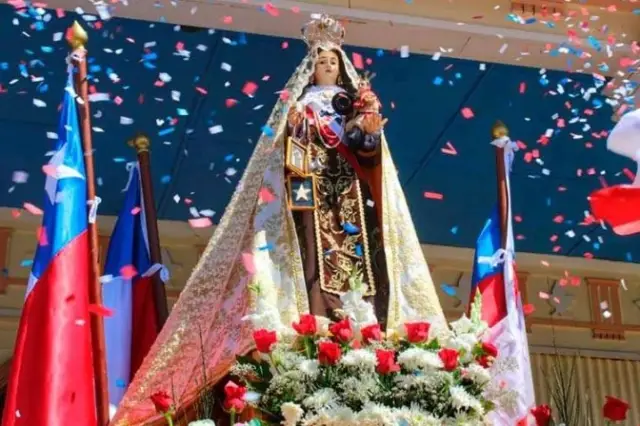
Devotion to the Virgin of Carmen in Chile is not only a manifestation of faith, but also a powerful expression of cultural identity and national cohesion . From the largest cities to the most remote villages, her image is present as a spiritual guide, protector of the home, and symbol of the country's history.
Furthermore, the holiday has a positive impact on tourism, the local economy, and the strengthening of the social fabric by bringing together families, religious communities, and visitors to participate in shared events.
Frequently Asked Questions (FAQ)
What day is the Day of the Virgin of Carmen celebrated in Chile?
On July 16th of each year, with masses, processions and patriotic events.
Why is the Virgin of Carmen the Patron Saint of Chile?
It was proclaimed as such for its symbolic role in independence and its spiritual influence at key moments in Chilean history.
Where does the main celebration take place?
At the National Shrine of Maipú , with a solemn mass, the presence of authorities and a parade of the Armed Forces.
What does the Scapular of Our Lady of Mount Carmel mean?
It is a symbol of spiritual protection given to the faithful who profess devotion to the Virgin and commit to living a Christian life.
A date that unites faith with Chilean identity
The Feast of Our Lady of Mount Carmel in Chile is a sacred occasion that allows people to reconnect with their religious, historical, and cultural roots. Beyond Marian devotion, this date represents an act of national unity, where spirituality, tradition, and a sense of belonging intertwine in a profound and meaningful celebration. Participating in it renews a commitment to love, faith, and hope shared across generations.