The Chilean summer from the 90s to today
For decades, the Chilean summer has been synonymous with vacations, warmth, the sea, and festivities. However, those who lived through the 1990s and those enjoying the summer of 2025 can notice profound differences: the climate has changed, destinations have diversified, customs have transformed, and technology has altered the way we enjoy this season.
Today, summer is no longer just a time of rest; it's a season that reflects how Chile has evolved socially, culturally, and environmentally.
What was the Chilean summer like in the 90s?
In the 1990s, summer in Chile had a simpler, more local feel. Families used to travel on interprovincial buses or in family cars loaded with tents, coolers, and coolers full of drinks. Vacations were longer, and remote work didn't exist: people truly disconnected.
Some characteristic features:
More traditional destinations: El Quisco, El Tabo, Cartagena and Pichilemu were the most popular resorts in the center-south.
Clothing and style: T-shirts with logos, athletic shorts, jockey shoes, and the ever-present rubber flip-flops.
Entertainment: Portable radios, beach games, homemade ice cream, and afternoons strolling around the local fair.
Domestic tourism: Traveling abroad was uncommon; domestic tourism dominated completely.
Back then, summer was more communal. There were no cell phones or social media, which strengthened face-to-face conversations and shared experiences with family or friends.
Climate change and its effects on the Chilean summer
One of the most notable changes is the rise in temperatures and the alteration of the climate cycle. The summer of the 1990s felt more moderate, while today temperatures frequently exceed 35°C in several regions.
According to data from the Ministry of the Environment, Chile has experienced a sustained trend of drought and heat waves , especially in the central region. This has affected not only tourism but also agriculture, water supply, and forest fires.
This phenomenon connects with what we have already analyzed in Chile's environmental events , where climate change is one of the central issues for the country's future.
Tourism and new summer destinations
During the 1990s, coastal destinations dominated vacations. Today, Chile's tourism landscape is much more diverse. The rise of experiential tourism has boosted the northern and southern regions with sustainable and natural offerings.
Examples of popular new destinations:
North: San Pedro de Atacama and Elqui Valley (astronomical tourism).
Center: Maipo Canyon, Isla Negra and Rapel Lake (adventure tourism).
South: Chiloé, Futaleufú and Torres del Paine (eco-tourism).
The influence of social media and travel websites has transformed the way Chileans choose their vacations. Today, travelers seek out Instagrammable locations with unique experiences and a connection to nature.
You can see more about this change in traditional festivals in Chile summer 2026 .
From family postcard to digital selfie
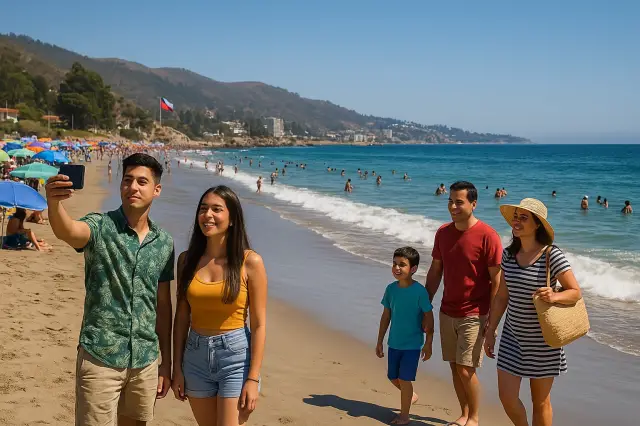
Photography also reflects the generational shift. In the 1990s, people used analog cameras and waited days to develop summer photos. Today, smartphones allow you to capture and share every moment in seconds.
Summer has become more digital and documented , but also more fleeting. Experiences are more visual and shared online, which has changed the emotional connection with vacation.
Summer customs that remain
Despite all the changes, some traditions remain alive:
Eat watermelon and frozen melon.
Listening to cumbias and tropical music on the beach.
Craft fairs and ice cream machines.
The classic “group trips” to the coast.
The Chilean summer continues to be a time of gathering, although adapted to changing times.