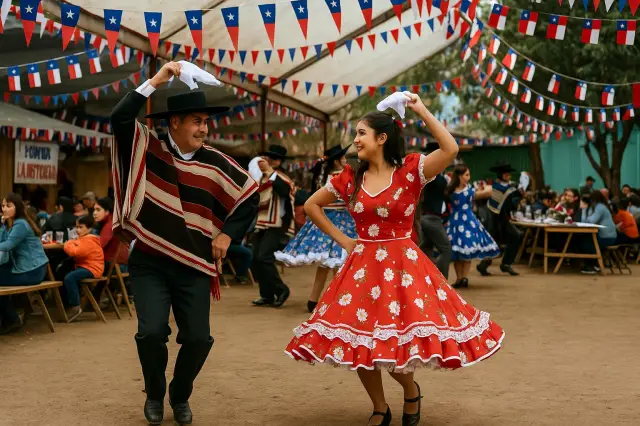
Chilean Heritage Month is celebrated every September , coinciding with the National Holidays on September 18th and 19th, when all of Chile is filled with flags, cueca dances, barbecues, and traditions that reflect national pride. It is a time to highlight the values, history, and folklore of our country, from Arica to Punta Arenas.
During this month, Chilean families enjoy fondas (traditional Chilean food stalls), parades, typical foods, traditional games and folk dances , all with a spirit of unity and national celebration.
While the highlight is the National Holidays , the Month of Chilean Identity covers all of September, with cultural activities, traditional fairs and events organized by municipalities, schools and folk groups.
Origin of the Month of Chilean Identity and its cultural significance
The Month of Chilean Culture was created with the aim of rescuing the country's cultural and heritage roots , highlighting the customs that define Chilean identity. Its origins date back to the 1970s, when various institutions began promoting folklore, traditional games, and typical cuisine.
September 18th commemorates the First National Governing Junta of 1810 , considered the beginning of the independence process. Therefore, September is not only synonymous with celebration, but also with historical memory.
This month invites Chileans to reconnect with their land, their music and their food , fostering national pride and the transmission of traditions between generations.
Typical activities of Chilean Heritage Month
Throughout September, municipalities, schools, and cultural centers organize a wide variety of activities. These are some of the most traditional events that shouldn't be missed:
Traditional festivals and inns
The traditional food stalls and temporary structures are the heart of the celebrations. There you can enjoy live music, traditional food, cueca dancing, and games. In Santiago, the most popular are Padre Hurtado Park (La Reina) , O'Higgins Park , and the food stalls at the National Stadium .
In the regions, the fondas of Valdivia, Concepción, Chillán and Punta Arenas stand out, all with their local touch and family atmosphere.
👉 You can read more about September holidays and National Holidays in Chile at https://www.calendariochile.com/blog .
Chilean rodeo and rural traditions
Chilean rodeo , declared the National Sport in 1962, is one of the most representative activities of Chilean Heritage Month. It takes place in rodeo arenas throughout the country and showcases the skill of the huasos (Chilean cowboys), the use of traditional dress, and the Chilean horse.
In addition to the rodeo, it is common to see displays of handicrafts, farmers' markets, cueca dance competitions , and tastings of local products.
Traditional Chilean games
During September, in schools, squares, and food stalls, traditional games that are part of popular culture are revived:
Kites and kite competitions.
Sack races.
Hopscotch.
Pull the rope.
greased pole.
Family treasure hunts.
These games promote coexistence, joy, and the preservation of traditions that, although simple, unite generations.
Typical cuisine of Chilean Heritage Month
Nothing represents Chile better than its traditional cuisine . In September, the aromas of barbecue, empanadas, and sopaipillas fill the streets and patios. Here is a list of some of the most representative dishes:
| Typical dish | Description | When is it enjoyed? |
|---|---|---|
| Empanada de pino | Baked dough filled with meat, egg, olives and onion. | Throughout the country during the fondas. |
| Anticuchos | Skewers of meat and vegetables grilled over charcoal. | During family barbecues. |
| Sopaipillas and pebre | Pumpkin fritters served with spicy sauce or pebre. | As an appetizer or snack. |
| Peach and barley drink | Sweet drink made with hominy and dried peaches, a symbol of summer. | At fairs and popular festivals. |
| Earthquake and chicha | Traditional drinks with pipeño wine and ice cream. | In inns and celebrations. |
🍴 Chilean cuisine has profound cultural value. On our blog you can read more about traditional Chilean food and its holidays .
Dances and music that mark September
The cueca: a national symbol
The Chilean cueca was declared the national dance in 1979 and is danced with handkerchiefs, traditional clothing, and great enthusiasm. It represents the flirtation between the huaso (cowboy) and the china (girl), accompanied by the sounds of the accordion, guitar, and tambourine.
In schools and public events, the national cueca championship is an eagerly awaited tradition, especially during the Month of Chilean Culture.
Other folk rhythms
Although the cueca is queen, other notable dances include:
Peasant tunes.
Northern Cuecas with brass instruments.
Mapuche and Andean music.
Dances of Chiloé and Rapa Nui.
These musical expressions showcase the cultural diversity that shapes Chilean identity.
Traditional Chilean clothing
In September, many dress in traditional costumes to participate in dances or school events:
Men: Huaso suit with blanket, hat, spurs and boots.
Women: Chinese or peasant dress, full of flowers and bright colors.
Wearing traditional clothing reinforces a sense of belonging and pride in national roots.
Celebrations of Chilean Heritage Month by Region
Chile is a long and diverse country, and each region celebrates September in its own way:
Northern Zone
In cities like Arica, Iquique, and Antofagasta , parades and school activities predominate. Andean traditions and patron saint festivals are also a part of the festivities.
Central Zone
The epicenter of traditional Chilean food stalls and cultural activities. Santiago, Rancagua, and Valparaíso are the most popular destinations during the Month of Chilean Culture.
Southern Zone
Regions like Los Lagos, Los Ríos, and La Araucanía celebrate with traditional festivals and culinary events. The Mapuche-Hispanic mix gives it a special character.
Southern Zone
In Magallanes , the low temperatures don't stop the traditional food stalls or dances. The celebration tends to have a more communal character.
How Chilean Heritage Month is celebrated in schools
In Chilean schools, September is a key month. Patriotic events, folk performances, and food fairs are organized, where students represent each region of the country. They also learn about the history of independence, the flag, and national symbols.
These activities promote respect for national culture and family participation, strengthening the sense of identity from childhood.
Holidays and important dates in September
September 17: Many companies grant a half day off.
September 18: National Holidays (non-negotiable holiday).
September 19: Army Day (non-negotiable holiday).
September 20th: in some years a bridge holiday or regional holiday is added.
These days make up the most anticipated long weekend of the year , ideal for traveling and enjoying domestic tourism.
You can check all the updated holidays of the year at CalendarioChile.com/blog .