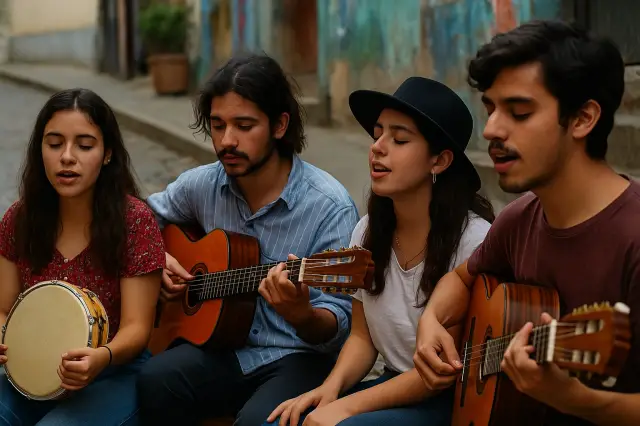
For years, Chilean folk music was seen as an expression of past generations. However, a shift began in 2024 and solidified in 2026: young Chileans are rediscovering folklore , fusing it with new styles, reinterpreting its lyrics, and giving it a contemporary feel that connects tradition and modernity.
This phenomenon is not only occurring in Santiago, but also in other regions, where new groups have found an authentic form of expression in their cultural roots.
New generations, new ways of making folklore
The resurgence of folklore among young people has many facets. From universities to local festivals, musical projects are emerging that reinterpret traditional rhythms with a fresh perspective.
Among the most prominent influences are:
Urban and fusion cueca , promoted by groups like Los Trukeros or Las Primas del Folclor .
Feminist folklore , with singer-songwriters who reinterpret traditional lyrics from a gender perspective.
The use of typical instruments (Chilean guitar, charango, tambourine) combined with electronic bases or jazz arrangements.
This reinvention demonstrates that folk music is still alive and evolves with the generations .
Urban cueca and fusion: the bridge between the classic and the modern
One of the most representative genres of this rebirth is the urban cueca , which maintains the rhythmic and narrative essence of the traditional cueca, but adapts to new urban and social contexts.
In neighborhoods like Ñuñoa, Valparaíso or Concepción, it is common to find peñas where young people mix guitar, bass and percussion with lyrics about modern life.
This phenomenon is reminiscent of what happened in the 1960s with Violeta Parra and Víctor Jara , but from a 21st-century perspective: folklore is once again a tool for identity, critique, and celebration.
Women who are transforming Chilean folklore
The prominence of women in this new wave is undeniable. Young singer-songwriters are reviving traditional repertoire and reinterpreting its lyrics from a modern perspective.
Some prominent examples include:
Camila Vásquez , who fuses folk tunes with acoustic pop.
Paula Ilabaca , poet and musician who incorporates popular verses into experimental compositions.
The project “La cueca no es solo de hombres” (Cueca is not just for men) , a collective that reclaims folk dance and music as inclusive spaces.
These artists not only modernize the sound, but also the social message of folklore, giving new strength to a deeply Chilean cultural expression.
Digital folklore: social networks and platforms as a stage
Social media has played a key role in this trend. On TikTok, Instagram, and Spotify, many young people share their versions of traditional songs or create collaborative playlists of “modern Chilean folk music.”
This phenomenon has allowed old songs by Margot Loyola or Rolando Alarcón to once again have thousands of plays, especially on dates such as September 18th or Chilean Music Day .
In addition, festivals such as “Chile Canta y Baila” or “Sello Raíz” have incorporated categories of “contemporary folklore”, promoting the creation of new audiences.
The role of universities and art schools
Regional universities are also an important driving force in the revitalization of folklore. Workshops, student groups, and music programs have created spaces where young people learn traditional instruments and reinterpret popular repertoires .
In cities like Valdivia, La Serena and Temuco, collectives have been created that investigate local roots and promote the creation of a new repertoire based on ancestral rhythms.
This educational movement is giving rise to a new generation of musicians with heritage awareness and a global perspective .
Folklore as identity in digital times
In an era dominated by international music and algorithms, many young people see folklore as a way to reconnect with their identity .
The need for belonging, the search for roots, and pride in local culture are elements that explain why this music is experiencing such a strong resurgence.
As one member of the Raíces Sonoras collective said, “we don’t want to sing like outsiders, we want to sound like Chile, but with our words of today.”
This phrase sums up the spirit of an entire generation that transforms folklore into a banner of authenticity.
How to support this new wave of Chilean folklore
If you are interested in joining or supporting this cultural movement, here are some ideas:
Attend local clubs and regional festivals .
Follow new folk artists on social media.
Listen to playlists of contemporary Chilean folklore on Spotify.
Share cultural content on key dates, such as Chilean Music Day .
A rebirth that unites generations
The resurgence of Chilean folklore is not a passing fad, but an intergenerational cultural recovery .
Thanks to the mix of styles, the critical eye and the passion for roots, folk music is once again occupying a central place in the country's identity.
In 2026, Chile sounds like guitar, tunes, and youth .
A new era of folklore is writing its own history, from social media to stages across the country.