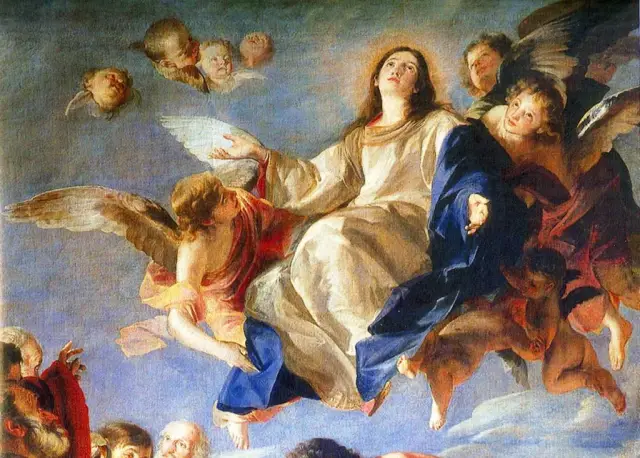
The Feast of the Assumption of the Virgin is one of the most important Marian festivals in the church and also for our country and others in Latin America that celebrate this day as a national holiday . It is celebrated every August 15 and during this day there is no work or study.
Read on and find out where it comes from and how the feast of the Assumption of the Virgin arose.
Origin of the feast of the Assumption of the Virgin
The Feast of the Assumption of the Virgin recalls the moment in which the body of Mary, the mother of Jesus, ascended to heaven, after finishing her days on earth. The origin of this celebration dates back to the 4th century, when a festival was held in honor of the memory of the Virgin Mary and her entry into heaven. At that party, a special mention was made of her assumption being received by the arms of her son.
At that time the festival was called the "Dormition of Mary", however, the belief of the assumption of the body of Mary began to develop in the 12th century. Specifically, it was in the year 1849 when this dogma took shape and the first requests arose for this doctrine to be declared.
Finally, in 1946, Pope Pius XII declared the dogma of the Assumption of the Virgin and four years later, in 1950, the apostolic constitution was published in which this feast was made official.