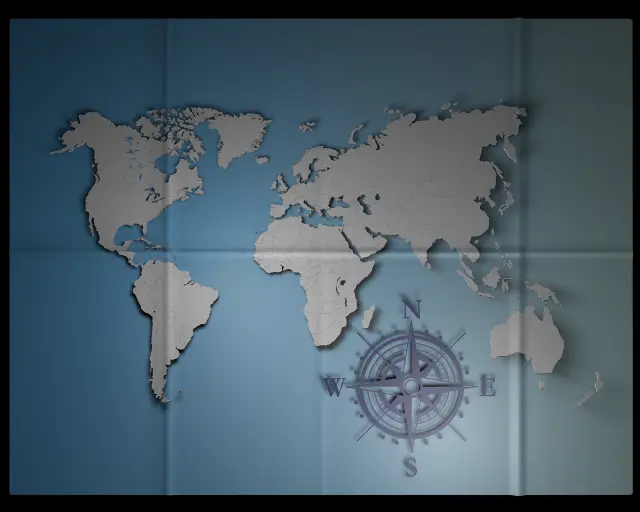
Latin American nations are especially diverse in cultural and ethnic terms, to the point that the denomination “ Latin ” and “ Latin ” is the way in which in other latitudes they try to condense that human wealth. Every year, around October 12 (the holiday may vary) we remember that on the same day, but in 1492 the explorers led by the Genoese Christopher Columbus arrived on the American continent , specifically one of the current Bahamas islands, from where they would spread to other lands already inhabited by indigenous civilizations.
As in many other cases, there is not a single history of the colonization of America but multiple narratives depending on who is speaking. The existence of the Day of the Meeting of Two Worlds has probably made you wonder: what should I do: celebrate or commemorate ? Here are some items for you to consider.
Celebrate or commemorate?

Celebrate is a word from the Latin celeber , an adjective similar to crowded, frequented. In its most common meaning, the Royal Academy of the Spanish Language defines it as "carrying out a festive act for something that deserves it", so that it implies celebration and even joy. Therefore, celebrating what has ended up being called " Encounter of Two Worlds " means celebrating that more than five centuries ago Native Americans and Europeans (accompanied later by many enslaved Africans) have coincided and started relationships of all kinds. Several years ago it was very common for schools to carry out formal acts on the subject and the mass media highlighted the good fortune of this event. The negative of this is to ignore or hide that this meeting was not rosy and, rather, was full of violence, illness and what today would be described as abuse of power and violation of rights.
On the other hand, commemorate derived from the Latin commemorare , used with the meaning of committing something or someone completely to memory. The Royal Academy maintains that when we commemorate what we do is "solemnly remember something or someone, especially with an act or a monument". So, applied to the date in question, it is equivalent to a public act of thinking with great respect and parsimony on that day in 1492 and all that it entailed, something relatively visible today, especially on social networks , recognizing that, at meeting the two worlds, one of them prevailed over the other and they still maintain asymmetrical relations. Here the negative can be, on the other hand, downplaying the fruits of miscegenation and ignoring the favorable points not of colonialism but of the intercontinental connection, as well as omitting any data that does not feed the proposed narrative.
Day of the Meeting of Two Worlds
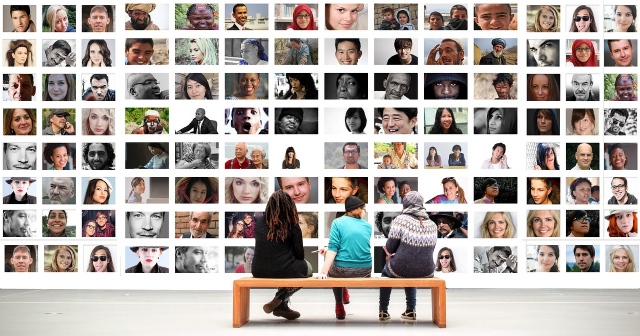
Clearly, we have not resolved the dilemma; however, we have reviewed points for and against two positions that are not the only existing ones. Feel free to assume your own position, always open to dialogue and critical analysis. Let us take the opportunity to remember where we come from, what we have been through and what we wish for our future. At the same time, let us celebrate that we are diverse, that our roots come from many parts of the world, that what we are and have today is something different, an invaluable treasure, and that everyone can choose and preserve the identity they freely choose, whether they are Afro-descendants , indigenous, white, mestizo or any other.